Releasing Anger Example

Applying what you know (or think you do!)

This is a rewrite of an article originally written and posted July 9, 2017

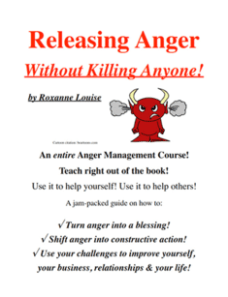
ReleasingAngerCoverpng


The bad news is that when you write a book on anything, especially mine entitled Releasing Anger Without Killing Anyone, the time of sustained focus required to write a book may bring about an experience to apply what you know (or think you do).

(Don’t you just love the Law of Attraction!)

The good news is that you do know (or should know) something to harness that energy constructively and then move it out of your system more quickly than you did in the past.

Think of it as the universe giving you AN EXAM. 

Here is an OPPORTUNITY to prove:

  • Do you know what you are talking about?
  • Or have you just been spouting nice sounding platitudes, airy-fairy nothings, intellectual but useless, impractical, untested, unproven ideas and information? 
  • Do your techniques actually work and make a positive difference?
  • Is there more yet to learn?
  • How can you set things up to avoid similar problems in the future?

So on June 29, 2017, a tenant, as she was moving out of my house, left water running in the upstairs bathroom. Gallons of water poured down from the second floor to the first floor living room, and down to the basement below. Rugs including a large Oriental, a mattress, books, furniture and other things got wet. Almost half of the living room ceiling had to be replaced, and as repairs were later made, drywall dust was everywhere. Most everything  had to be boxed up and moved out of the living room along with the furniture.

Likewise, two basement rooms were disrupted in order to mop up the water and get things out of harm’s way. So not only was my living room unusable for more than a month but so was the dining room and hall, and those two basement rooms as well. 

Immediately taking a long view of the problem, I knew that regardless of how much time, energy, work and out-of pocket expense would be involved, regardless of the bad timing and other demands upon me both health wise and financially, the problem would be eventually fixed, and the house would be restored to it’s former beauty. In other words, the problem was temporary. That tenant is now fully gone from my house, and I have a new, wonderful person living here. I had workmen who would help me clean up the mess.

fullsizeoutput_2cI knew that I needed to harness the anger into constructive action. So I called the appropriate people to get the help and advice I needed, and start and supervise the work.

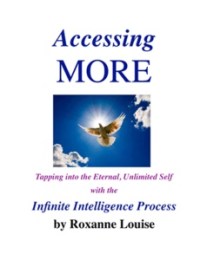
In the meantime, I did a lot of the Infinite Intelligence Process that I wrote about in my book Accessing More to both dump stress and access my internal guidance and wisdom within.

I did EFT tapping (Emotional Freedom Technique), dowsing for emotional healing, and meditation because I did not want the anger to poison me or cause my health to further deteriorate. Plus, I wanted any and all possible contributory factors resolved.

I also did not want to project my anger back to my former tenant as it would then be a curse on her head. Because I believe that we are all connected, the corollary is that what I send out comes back to me.

To help shift my attention, I focused on what I had to be grateful for. What was left? What was good? 

  • Well, certainly the damage could have been much worse.
    • Luckily, I was only away from the house for an hour. Many other precious items in my living room and basement were not ruined even if some got wet, but would have been otherwise.
  • Help was immediately available. 
    • Two farm workers were here that day who immediately came in and helped move furniture, mop up the water, take the worst of the ceiling down, and set up fans to dry everything out to lessen the chance of mold.
    • I quickly located and hired a drywall laborer to reinstall new sheetrock and to paint.
    • A friend put me in touch with a cleaning lady who came after the ceiling was repaired. She helped me take down, wash and rehang all curtains in the living and dining room, wash, dust and vacuum everything on the ground floor and upstairs hallway. The net result was that I ended up with a much cleaner house.
    • My insurance agent came quickly, and although I did not file a claim for various reasons, I got the information I needed. 

Throughout the process, I asked myself:

  • What could I learn and how could I grow from this experience?
  • How I could prevent something like this happening in the future?
  • What I might have done differently that might have prevented it?

In other words, I was actively looking to pull a blessing out of the experience. 

To get all my anger and everything off of my chest I wrote a letter to my tenant. But after writing and rewriting it, I read it to a close friend who is also a lawyer for her input. What upset me most was that my tenant took no responsibility for her actions. Instead she was just blaming me. I felt it necessary that she understand the ramifications of her negligence so she be more careful elsewhere. This stopped the imaginary conversations of what I wished I said to her from continuing to loop in my head.

I learned long ago that:

  1. writing letters that you do not send acts as if you did. It allows you to get everything off of your chest as if you really did say what you wanted to say to them.
  2. pause before sending anything in writing, and then only if you must. Less is better. The written word lasts forever, where spoken ones are quickly forgotten.
  3. Groaning over damage done and what cannot therefore be changed (what’s done is done) is a waste of precious energy. You need to conserve that energy in order to stay healthy and to address the problem.
  4. Complaining to people who cannot help you is an immediate, very short term vent, but counterproductive otherwise.

In fact, complaining or venting beyond the immediate time frame can just be a

  • ploy for sympathy as the ‘victim‘.
  • It can be revenge by getting other people to hate your adversary as well.
  • It can be a substitute for any real action–an excuse not to do anything.
  • It can be justification for your own mistakes and
  • avoidance of any responsibility for what happened, and
  • avoidance of the need to change personally.

Best to talk only to those that can offer some good information and advice while remaining detached emotionally from your issue. And then listen with an open mind.

Only clear eyed, detached processing of everything that happened and why without jumping to attaching blame is helpful. Then accept what can not be changed, create an action plan, and get to work immediately. As you see progress, the quicker your rage will die down.

Personally, I would have loved to had someone just hold me. But since I don’t have a partner, I grabbed a cat and snuggled with him. I sat with my piggies. I hugged my dogs. I looked up at the sky. I picked up and talked to the toads. I noticed some of the abundant sweetness that is on my farm. I remembered that I am loved, that I have meaning and purpose in this world, that this is a beautiful place, and I am choosing to be alive and present. 

At other times and places, I may have made love, watched funny movies, gone dancing or done something nice with friends just to discharge energy and regroup. But what is important is that you actively do something.

There is always something still left to enjoy and appreciate—even a memory to lift your spirit. 

  • Did I pass? I think so.
  • Will I do things differently in future? Absolutely!
  • Will I forget the lessons? No.
  • Can what I learned help someone else? Yes, I know so.

Copyright 8/2018 by Roxanne Louise. However, this article may be shared in other free online sources only if this copyright notice and link to http://www.roxannelouise.com and http://unlimitedpotentialhealingcenter.com are included with the content.

Why should Hypnotherapists and others should learn pendulum dowsing?

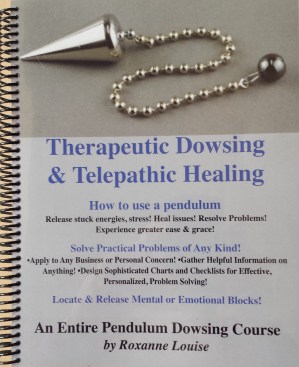
20190411_dowsing cover


Pendulum Dowsing locates issues very fast. It allows you to quickly grasp the broader dynamics so you become more comprehensive and effective!

This translates into greater productivity and client satisfaction, and enhanced reputation, more referrals, and greater job satisfaction for you.


Benefits of Dowsing:

  • Rapidly locate the root cause and other factors involved in any issue even before a client walks in the door!
  • Pinpoint what needs to be addressed before the intake interview! This can guide the intake process itself by knowing what questions to ask!
  • Establish priorities and a treatment plan!
  • Track client acceptability of various hypnotic interventions and proper pacing!
  • Set up a strategy for problem solving of any kind – personal or professional!
  • Clear causative factors or determine a strategy to do so!
  • Determine the client’s subconscious motivation to solve his problem/reach his goal, do his part to help himself!
  • Quickly determine where a client is stuck and use dowsing to clear it!
  • Use for marketing strategies, finding an office, and a host of other practical business matters!
Dowsing whether done using a forked stick, L-rods, bobber or pendulum is a wonderful way to tune into the vast information stored in the unconscious and superconscious mind. While historically been used to locate water, gold and ores, and more recently applied to locating missing persons, pets, objects such as unexploded bombs, it can be used for literally everything INCLUDING every aspect of your client work, business and personal matters.
As a hypnotherapist, I use it extensively to locate and clear stuck energies, both for myself on a regular basis, and for my clients. Stuck energies include mental and emotional issues and upsets that have piled up and make dealing with current issues, staying healthy or healing if you are ill, achieving your goals, and living your life with enthusiasm and abundant vitality much more difficult. So freeing up this energy is vital to all areas of your life. It includes not just the unpleasant memories but also the negative beliefs and judgments about those events that continue to color your world and limit you in multiple ways including resolving it effectively.

How does energy get stuck?

Basically, energy gets stuck when it is unprocessed. Perhaps when an upset occurred, you or your client didn’t know how to deal with it and, therefore, didn’t. Perhaps you were too young. Perhaps you didn’t have the skills, or the awareness of what you were registering on an unconscious level. Perhaps your family, culture or religion taught you to deny and not express your thoughts and the resulting emotions. So you may have stuffed your feelings instead of quickly resolving them thereby avoiding future issues.
On the other hand, even if you had the awareness of the importance of resolving issues and even the therapeutic skills, you may have had neither the time or energy to do so. This frequently happens during a crisis, ill health, or overwhelm. By the time the emergency passes, you may be so busy on catching up on other needed tasks, that you lack any interest in going back to dealing with past unpleasantries.

The Unpleasant Wake-Up Call

As you are aware, unprocessed negative emotions and the non-beneficial thoughts have a way of surfacing as illness, insomnia, nightmares, relationship issues, increasing irritation, explosive bursts of anger, depression, malaise, and problems of all types. Consequently, it is important process them as quickly as possible. However, many times what you think is resolved does not stop the negative repeating pattern. This indicates that you never addressed the root cause or other important factors.

Dowsing can help!

This is where dowsing is profoundly helpful to locate what you missed. Yes,  you can do hypnotic regression work, or unconscious healing modalities, but all are very time consuming and require the assistance of someone else (if it is for yourself). Here is where you can do powerful self-healing as well as cut to the chase with your clients as well.

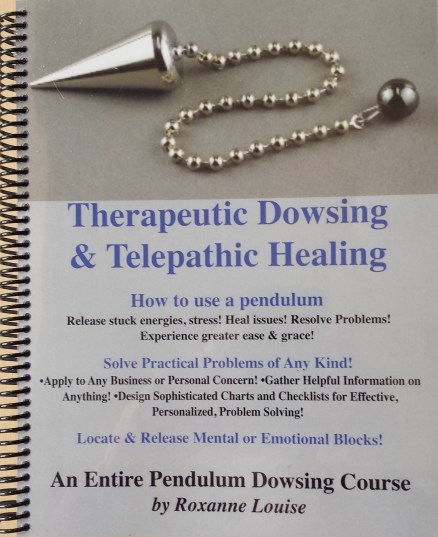
Roxanne has written an entire course manual pictured below. Available through her website, www.RoxanneLouise.com.

20190411_dowsing cover


More

On Being Acknowledged

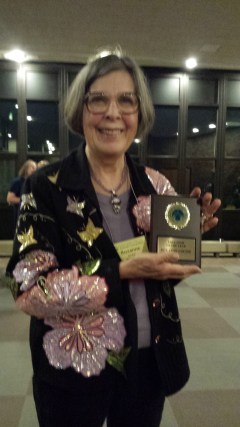
20180616_awardASD:me

Educator of the Year Award

At the June, 2018 American Society of Dowsers Convention held in New Paltz, New York, I was honored with the Educator of the Year Award.

20180621_ASDaward

This is not the first time I have been given a National Award. I have five from hypnosis organizations (the list is here). And while I regularly teach at national and regional dowsing conferences, run Central Virginia Dowsers, monthly Dowsing Support Teleconference Calls, and have written 9 books and over 118 articles on hypnosis, dowsing, self help, mind-body healing, etc, NONETHELESS it means a great deal to be recognized, not just for me, but for anyone.

The importance of recognition

Being seen, heard, appreciated, publicly acknowledged for whatever contribution we make in life is one of the best gifts we can receive and give to another. Many people go through life feeling invisible, and that their work, loyalty, dependability, kindness and consideration, their going the ‘extra mile’ are taken for granted. That is devastating to the human spirit, causing resentment, bitterness, anger or great sadness. Worse, it causes people to sometimes give up instead of continuing to do their work. The world suffers then as a result.

It doesn’t matter if that work is Mom reliably making your meals, washing your clothes, getting you to school on time. Or it is someone that opens the store every day on time, comes and feeds your animals so you can go away, takes you to the airport, does favors large or small, or fills in the countless gaps where we need and count upon others to help us. Everyone needs to be acknowledged for what they do.

How wonderful if we each could notice and thank others – not just with a superfluous ‘thank you’, but by gripping of the person’s hands, looking them in the eyes, and really conveying genuine appreciation. Let them feel your heart. Being seen and heard and appreciated are vital to the human spirit. Indeed, it is vital for health and life itself. Feeling valued, feeling that we are important, and an integral part of the group is the glue that holds all meaningful relationships together — families, friendships, neighborhoods, communities, businesses, organizations and more. 

Recognition does not mean giving a trophy to every participant, or an award where there was no meaningful effort. Such plaques are empty, even insulting. But it does mean  acknowledging in appropriate ways for the degree of service that is provided or effort made. The best award is one in which others agree that ‘you deserved it’ and can celebrate with you for a job well done. Yet, even small acts of kindness, good manners or common civility should be acknowledged. Someone who has just opened the door for you deserves to be looked in the face when saying ‘thank you‘. Shake the hand of the person who has carried your groceries or loaded your car. Because…

Gratitude blesses the giver as well as the receiver. 

And as to the person who receives the acknowledgment, it is a testament to their rising to the occasion whether there was rain or snow, whether they were tired or having a bad day themselves, whether it was difficult or not. They showed up that day and the next, and the next, to do their part. They noticed a need and fulfilled it. They stepped up to the plate. Yet…

Each of us stands on the shoulders of those that have gone before.

Awards not only honor those that receive them, but to the countless others who taught , mentored or coached them in developing character, discipline, responsibility, skills and expertise, and most important, humanity.

Behind every successful person are dozens of others that helped them along the way.

There is a saying that ‘behind every successful man is a woman’. But in truth, each of us is the person we are today because of others teaching, guiding, inspiring, supporting, and believing in us. No one achieves anything on their own. And in thanking that person, you are also thanking their parents and elders, their teachers, their pastor, their supporters and heroes.

This awareness helps to balance the ego. Yes, the one recognized can be rightfully proud of their achievements and what it took to get there. They can and should honor their own personal dedication and decision to be of service in any way they could, large or small. And at the same time, they should turn around to thank those who made it possible.

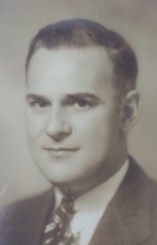
20180625_Dad

So, in addition to countless others who have helped me including my spiritual team, I want to thank my father, William Erwin Wackenhuth, for what I have achieved and the person I am still in process of becoming. He was a man who dropped out of high school at 16 to go to work as a draftsman. Yet he finished Newark’s Arts High School, then college at Newark College of Engineering and all but the final part of his Master’s Degree, all by going nights and walking miles each day just to save the trolley car fare.

He was a highly intelligent man, lifelong mechanical engineer, inventor, teacher at General Motors, ham radio operator, Sunday school teacher, devoted son, brother, husband and father. He was a Christian who lived by an examined (not blind) faith, and a man of enormous integrity, and dedication to his family. As many have said of him, ‘they broke the mold’ after he died. Yet, I see his legacy being passed on through my son. And I witness others who also were molded by men and women of strong character that are making an impact in their world. It is my hope that these traits become dominant in the American people once more.


Blessings in Disguise

All of us can probably think of things like romances, houses, jobs, relocations and more that seemed great at the beginning, but then proved not so great. Maybe even after the luster wore off, we may have hung in there because of our investment in time and money, or not wanting to ‘rock the boat’,  security, or because ‘the devil you know is better than the devil you don’t know.’ Perhaps we tried to hang on because of embarrassment, or not wanting to admit that we were wrong or made a mistake.

We probably also know of those sudden change of fortune — breakups, job or business losses, disappointments or rejections — that seemed to be so horrible at the time, but which led eventually to something much better, and to much needed growth. 

We never know how things will turn out

There is an oft told Sufi story about a farmer whose son found a wild horse. “How wonderful,” the neighbors exclaimed, “that your son has this new horse!” “Maybe yes, and maybe no,” said the farmer.

Then the son as he was ‘breaking’ this horse, was thrown off it’s back and broke his leg. “How awful,” said the neighbors, “that your son broke his leg.” Again, the farmer replied, “Maybe yes, and maybe no.” 

Then war came to the region and all the young men in the village were rounded up to go into battle. “How wonderful,” said the neighbors, “that your son doesn’t have to go to war.” And once again, the farmer replied, “Maybe yes, and maybe no.” 

A true story

My friend, Nelson was told by his boss on a Friday to take his department of 40 people out to lunch and deliver the bad news that because of the Japanese buyout of their firm, that the entire department was being let go.

So after lunch, the security guards walked everyone back to their desk to pick up a 2-week severance check and their personal items before being escorted out the door.

On Friday, they were all in shock and thinking it was something terrible that just happened to them. But on Tuesday, all those not dismissed were dead because they worked on the very floor of one of the Twin Towers in Lower Manhattan where one of the planes came through. The date was 9/11.

Sometimes what looks like the worst thing that could have happened to you turns out to be the best thing that could have happened!


Perhaps we can acknowledge that the job, business, home or relationship we lost had it’s downsides. There may have been things about it that we didn’t like, that we barely tolerated, that were highly stressful, that hemmed us in, that limited our ability to grow or explore as we grew. We may recognize that what we had and once wanted was no longer so, and that we were moving, or about to move, or needed to move in a different direction. 

Sometimes, what we lost might have been okay or even good while it lasted, but sudden events caused us to move on to something that was even better and more fulfilling. It might have opened up many new experiences, and to explore other parts of ourselves in wonderful ways that otherwise would not have happened.

Another true story

A couple living in California lost their home and all of their possessions in one of the wild fires that came through their canyon. Totally stressed and not knowing what to do next, they left their jobs, and decided to take six months off while they considered their options.

Deciding to buy and move into a small RV, they started wandering the many national parks. They enjoyed it so much that they started writing a blog, and then went on the speaking circuit to motorhome enthusiasts discussing various aspects of living in a motorhome full time, nice places to visits, and how to make money on the road. It became their new livelihood. They were very happy in their new life and considered the house fire a blessing.

I followed them for a few years while I was doing a small bit of the same after a divorce. 

And another true story

A friend of mine in Ohio was woken up by her cat who would just not let her spend a minute more in bed. As she came into consciousness, she smelled smoke. And indeed, the house was on fire. Both she and the cat got out safely. Luckily, the kids had already gone to school and her husband was at work.

The back of this 19th century farm house burnt down. But the rest of the entire house and all the possessions were either soaked and destroyed from water from the firemen’s hoses, or saturated with smoke. All the clothes, rugs, upholstery, and many other belongings had to be trashed. 

The family had a trailer brought onto the property as they too decided what to do next. They knew that they wanted to stay there and rebuild as they had friends and roots. But how to rebuild? 

My friend gave everyone a sheet of paper. She, her husband and each of the three kids all wrote out their wish list for a ‘dream house’, ideal bedroom, bathroom, kitchen, etc.

Knowing their budget from the insurance, they devised plans on the most important wish list items. The kids got their own bedrooms, and a bath with double sinks and a shower. My friend got a large working area of the kitchen with a large center island open to a dining area of the kitchen big enough for company. She wanted and got a sewing room. Her husband got a comfortable t.v. room and a recliner. 

In short, they end up with a wonderful, beautiful, totally renovated and updated ‘new’ house, along with new clothes, new furniture that they couldn’t have afforded ANY OTHER WAY!

My story

More than two decades ago, I was praying to fulfill my purpose or mission in life. Immediately, my marriage fell apart. One day my husband said that he didn’t know if he wanted to be married anymore. I was devastated. Yes, I knew we had problems, but I am one that hangs in there always hoping that things will improve even though I was also not satisfied in the relationship. 

Soon after I had a dream about a dilapidated but once beautiful house. It needed tons of work – work that was daunting. Everything had to be renovated even though the house ‘bones’ were good. I was so discouraged and not sure that I was really wanted to go through what it would require to be beautiful again. It could be better for sure, but was it going to be worth it?  Would enough get done so that I would be happy with it?

Then I found out that he was being unfaithful. That was the final straw and was the one thing that would allow me permission to file for divorce. Indeed, it pushed me to do so and move on with my life. And it turned out to be the best possible thing that could have happened. Today, I am grateful for his bad behavior, because it freed me from a toxic situation full of constant lies and distrust. 

Conclusion

While like the Sufi farmer, we may not know where life is leading us when hit with what appears to be a sudden loss of good fortune. But we can make a decision that we are going to learn from and grow through it. And that one way or another, we are going to make these sudden changes work for us – even bless us and others.

As I have written about in previous blog articles, you might ask:

  • If it could work, how might it work?
  • If something good can come out of this, what might that be?
  • How can I turn this into an opportunity? 
  • How can I grow through this experience?
  • What can I learn from this that not only helps me, but helps someone else?

In short:

  • How can I turn this into a blessing?

===========

FOR MORE INFORMATION: see our main website: http://www.roxannelouise.com or call 434-263-4337

Copyright 6/2018 by Roxanne Louise. However, this article may be shared in other free online sources only if this copyright notice and link to http://www.roxannelouise.com and http://unlimitedpotentialhealingcenter.com are included with the content.


What if illness was sometimes a choice?


Introductory Note:

Nowhere do I mean to imply that all illness is a choice or that it is conscious. There are many factors that are beyond what any one person can control such as their dna, the health and nutrition of their ancestors, early childhood nutrition, unavoidable exposure to trauma, toxins in food, air, water and more. And ultimately all bodies break down over time and die.Santa Cruz Vending 7:16 copy

But I want you to consider where you do have control. As you become aware of things you can do, but do not take action to do something, then the question becomes, “why not?”

————————————————–

TO BE OR NOT TO BE — SICK 

Putting forth the premise that illness is a choice may sound harsh. But think about it this way:

Long before you got sick, you were entrenched for years in hundreds of little habits–habits of eating, exercise, work, lifestyle, smoking, drinking, and habits of how you handled stress, conflict and negative emotions. Even your thinking has been largely a matter of habit. And because thoughts determine emotions, which in turn create different biological chemicals in your body, emotional states and body chemistry are the results of thoughts, beliefs, judgements, and habits of mind. And that involves choice – both conscious and unconscious.

Regardless of what habits or beliefs were installed in childhood by family or culture, upon reaching adulthood, it becomes a choice to continue those habits and to hold those beliefs without question, or not. It comes down to whether they work for you or whether negative consequences appear that call for change.

Choices become habits, and habits create destiny

All habits come about through little decisions made again and again, perhaps multiple times daily until they become an automatic program that starts to run your life. Allowing thoughts to continually be held in mind is a choice, and this choice then becomes part of your attitude and personality [see work of biologist Bruce Lipton, Ph.D.]. 

Further, your beliefs, judgments, and interpretations of events and experiences collect evidence to prove you right. Left unchallenged (a choice), they will either attract more similar experiences or you will tend to feel and react as if they were similar even though they were not.

These mental habits will guarantee what emotional and physical consequences you experience both immediate and long term including illness. For example, if you interpret a situation as ‘this is scary’, you will activate the stress hormone of cortisol, which shuts off the biological functions of growth, digestion, repair and immune functioning. Whereas if you interpret the very same event as ‘this is exciting’, ‘this is an opportunity’, or ‘what a fun challenge’, your internal chemistry will be very different.

Routinely interpreting what is happening around you as threatening will over time damage your health.  However, you can choose to interpret or judge a situation differently, to react differently. Following a decision to do so, and then practicing over time to retrain your mind, might make the difference you need to heal.

Consequences

So there are consequences to all of your choices and the habits they become. And these consequences include your health, mental and emotional well-being, or lack of same.

However, at the time that the choices were made, you may have been unaware of those consequences or you lived in denial. After all, when you picked up your first cigarette were you really paying attention to the health risks? Did you think that you were invincible? Did you think you could outrun the bullet, and that the health warnings didn’t apply to you? Did you just figure on having just a few, and quitting tomorrow? Were you bargaining, “please, God, just let me have this one ___ (cigarette/drink/ice cream sunday) and then I’ll stop and be good!

Now, years later you may become aware that it has come time to pay the piper. What do you do when you don’t like the negative consequences of your choices? How do you unravel bad habits, bad decisions, limiting beliefs or judgments for which you are now paying dearly?

Making different choices

Healing requires change, and change can be scary.

If a health problem is a result of long standing habits and patterns, healing will always require changing those habits and patterns. The necessary changes may be all pervasive, even drastic, and can be just as scary as the illness itself.  Carolyn Myss in Why People Don’t Heal and How They Can, says that

“many of us are almost as afraid of healing as we are of illness.”2 

Even though a person may be aware of the risks, and their doctor may have recommended dietary, habit or lifestyle changes over the years,

only when there is a clear cause and effect relationship of certain habits and choices with the negative consequences do most people begin to make even the smallest, yet alone the big changes, that may be necessary.

This follows the Law of Inertia, a body at rest tends to stay at rest, and a body in motion tends to stay in motion.

It takes more energy to shift direction than to continue to do what you have always done.

And it will take dedication on a daily basis to overcome the years of negative programming. However, each day you choose to practice new habits, it will gain in power.

How committed are you to heal?

Are you willing to do whatever it takes? And if you aren’t, can we then say that you are choosing to remain sick? Myss asks the following:

“If healing required moving to another part of the country, changing your attitudes toward others and yourself, changing all your physical habits, such as diet and exercise, being alone for a long period of time, or going on a retreat to confront your shadow, experiencing illness as a way of healing mentally, emotionally and spiritually, or losing everything familiar to you — home, spouse, job–would you do it?” 3

John Harrison, MD, in Love Your Disease–It’s Keeping You Healthy says that

Anybody prepared to make fearless decisions in their best interests will avoid all major illness and most minor ones as well.”

Illness provides benefits called secondary gains

There may be positive payoffs to being sick. For example, illness may get you out of a job, activity, situation, relationship, or a responsibility that you hate. It can provide an excuse not to do, or not to go where you don’t want, or to do something that you do, for example, to stay home and watch television. It may provide financial awards, temporary or ongoing income, medical benefits, and time off from work. [See article “Secondary Gain – a Gain from Pain”

Illness may get people off your back. It may provide an excuse, and special considerations or privileges such as handicapped parking. It may allow you to avoid responsibility for yourself or others. It may cast the die–letting the disease or condition make a decision for you when you are too indecisive or weak to do it on your own.

Illness may pull a family or relationship together, or provide a way to check on the feelings of others. It may let others know that you need them, providing them with an important role, and helping them to feel good about themself for helping you. Illness can be a way to get people to come to visit, and to obtain desired attention, emotional assistance, concern, sympathy, demonstrations of caring or love. It can be a way to get people to do things for you, even getting waited on hand and foot as in hospitalization. Finally, a health problem can be a form of self-punishment, a way to atone or pay yourself back for guilty thoughts, feelings, behavior.

Because of all of the above, a person on an unconscious level may choose to become ill, or to do things that make him liable to get sick. Once sick he may obstruct healing, or do all the wrong things such as a diabetic eating sweets, to sabotage getting better. 

As Myss says, 

Illness can…become a powerful way to get attention you might not otherwise receive”, and “as a form of leverage, illness can seem almost attractive.”

Benefits to illness can be secondary or primary to the condition. They can be conscious or unconscious (below the level of awareness). As in which came first, the chicken or the egg, did the person get sick in order to get his needs met? Or did he get sick as a result of bad habits or some other reason, and then notice that there were some payoffs in being ill?

Harrison says that

The person is needy, rather than sick….People get ill to get what they want… People do not get what they want…so they become ill.”5

Basic needs,  such as attention, solitude, caring, must be met one way or the other. And if illness is providing those needs, the person must feel secure in meeting those same needs, just as easily as before, but now in a healthy, constructive way. Otherwise, he will resist getting well, or he will get sick again to get his needs met.

A Wake Up Call + Hope

To break the negative cycle, both the pain of the illness needs to be great enough for the person to be motivated to change, and the person must have hope that making changes will make a positive difference in his health.

Without hope or positive expectancy, why bother to even try?

Harrison further states that

“Disease is both self-created and self-cured…. Illness is the physical and psychological result of unresolved needs, not a malfunction of a machine caused by unknown or external factors….We give ourselves illnesses in order to ‘take care of ourselves’ psychologically.”

Harrison and Stephen Parkhill, author of Answer Cancer, refer to an unspoken contract between doctor and patient that says the following. The doctor, in exchange for money, will remove unpleasant symptoms for the patient without upsetting the patient’s chosen lifestyle or habits, attitudes or feelings, judgments or beliefs. The doctor will participate in the illusion that the patient is a victim and not responsible for either the disease or its removal and return to health. The doctor will take over responsibility for the patient’s health and all decisions relevant to his health care.

Harrison puts it this way:

“I have consulted you to have my need recognized, my suffering validated, my pain removed and my disease retained. In return, I will support you financially and give you status commensurate with the powers I ask you to exercise.”6 

As Harrison further states,

“It’s this need to be taken care of by people more powerful than ourselves that leads us into taking some decisions that are damaging to us in the long term.”

This agreement between doctor and patient may eradicate symptoms, but miss the cure. It has all the dysfunctional psychodynamics of the Victim-Rescuer-Persecutor Triangle7 –the patient being the Victim, the doctor/therapist being the Rescuer, and the disease/condition being the Persecutor. Roles can switch if compliance in the game is unsatisfactory.

Patients need to get out of the game and take back responsibility for their illness, and take back their power to heal. But in doing so, they need to understand the role that not just their physical habits and lifestyle play, but the all important component of their thoughts and emotions.

What emotional states cause illness?

Parkhill believes that ailments in general come from an unconscious need for self-punishment, self-mutilation, or limitation. He also feels that guilt, blame, criticism, fears, such as the fear of abandonment, or the fear of not surviving because essential needs are not well met, play a role.

To his list, I would add that many other emotions and internal conflicts could be involved depending upon the illness and where it is located. German New Medicine outlines a number of emotional shocks that if are not quickly resolved lead to very specific diseases. [See article “German New Medicine & the Mind-Body Connection”]

Louise Hay, author of You Can Heal Your Life, thinks that thoughts of being not good enough, self-hatred or criticism, resentment and guilt are the most destructive to our health. Conversely, she feels that forgiveness, self-acceptance, love and releasing the past are key for healing.

Unraveling Bad Choices and Making Better Ones

Postulating that illness is a choice, even if it is an unconscious one, implies that there is a different choice or choices that could potentially be made that would leading to a different outcome–one of health, vitality, and overall well-being. Once clear about the negative consequences of all of your habits and patterns, you may be motivated to change. This will include making changes in your thinking, beliefs, attitude, how you deal with stress, as well as diet, lifestyle. 

Make a commitment to take positive action. Start with making the most obvious and the most do-able changes, and the changes most likely to make the most difference.

There are many ways of tackling the various mental, emotional and habit components.

  • Self-hypnosis really helps to focus on priorities, increase motivation to do what you need to do, change negative thinking, and to release stress. 

The modalities or techniques listed below are also invaluable in releasing stress, self-sabotage, and healing issues. Dowsing, Emotion Code, Hypnosis, and NLP have the additional benefit of being able to locate the source/s of the problem.

  • Thought Stopping and Switching 
  • Emotional Freedom Technique
  • Emotion Code
  • Tapas Acupressure Technique 
  • Hypnosis
  • Neural Linguistic Programming 
  • Pendulum Dowsing 
  • my own Infinite Intelligence Process8 [see article “Accessing More”] 
  • Through hypnosis or Time Line Therapy you can go back in time to a choice point and make a healthier, more constructive choice that leads to health. I like the unconscious healing modality that I call “Change Decision”9 that taught to me by A.L Ward, but those of other hypnosis mentors such as E. Arthur Winkler or Walter Sichort and his protege James Ramey, who did something similar.
  • Next, you can imagine traveling into the future to a time when the problem has been satisfactorily resolved, find out how that was done, and bring that solution back to the present moment along with the resources to do it. This is called Future Pace, or Crystal Ball, or Magic Wand — all hypnosis and NLP techniques.
  • Or again with hypnosis, you can imagine going into a parallel universe in order to change direction to an alternate reality more of your liking. Go the station platform and change trains.

===========

FOOTNOTES:

1. First published in 5/2007

2. Why People Don’t Heal and How They Can, page i x.

3. Ibid, page 138-139.

4. John Harrison, M.D., Love Your Disease, page 51

5. page 46-7

6. Love Your Disease, page 59

7. The Victim-Rescuer-Persecutor Triangle is typically seen with alcoholics, drug addicts, gamblers, and many of the chronically ill. The Victim uses his problem to manipulate and control others into taking over responsibility for him, bailing him out of problems, and meeting his emotional and perhaps financial needs. The Rescuer initially feels good to be of help, but later comes to feel as if he, himself, is being victimized by the very person he is trying to help, who has takes on the role of Persecutor. Rescuers are caught in this trap because they do not feel good about themselves unless they are helping those they consider more unfortunate than they. Most people in the helping profession as well as nurses and others in the healing arts start out as Rescuers. Hence, they are vulnerable to being used and abused by others. Awareness helps, but the biggest cure for this is high self-esteem and healthy boundaries.

8. ACCESSING MORE – Tapping into the Eternal, Unlimited Self with the Infinite Intelligence Process by Roxanne Louise

9. Change Decision is included in the Visualization Chapter of my book, Your Unlimited Potential, a complete self-hypnosis course and introduction to professional hypnotherapy.

=======

“Illness as Choice ?” Copyright 7/2015 was then expanded and rewritten 6/2018 as “What if illness were a choice?” by Roxanne Louise. However, this article may be shared in other free online sources only if this copyright notice and link to http://www.roxannelouise.com and http://unlimitedpotentialhealingcenter.com are included with the content.

FOR MORE INFORMATION: see our main website: http://www.roxannelouise.com or call 434-263-4337


Getting to the Root of It

Anyone who has dealt with weeds knows that unless you can dig up the taproot, the weed comes back. And anyone who has gotten a splinter, knows that until you get it all out, the pain continues. Get only part of it out, and it becomes inflamed and perhaps infected. Thinking positive, ignoring it, or trying not to think about it only prolongs the problem and make it worse.

 And so it is with negative repeating patterns. Any time there is a negative pattern of any kind, you can bet that the root cause has not been addressed. The only way to change things and stop the same problem occurring over and over again is to find and clear the original issue, which will be the unhealed trauma and the negative belief or judgment about the experience.

If you are successful, you will probably not get any more such experiences, or at least, less of them. But should something similar happen again, it’s effect upon you will be greatly mitigated, and you will much more quickly, and with greater effectiveness, grace and ease handle it in a better way. While the annoying people in your life may not have changed, you will have. Therefore, your experience of it will be different. Because you think differently about things that used to bother you, you feel and respond differently.

Getting to the bottom of issues can be tricky and time consuming.

The original event and the interpretations about it may be unknown, long forgotten or repressed. And instead of just one traumatic event, it may be a layering of multiple events, each reinforcing the detrimental judgment that with a self-fulfilling prophecy that tends to 

    • either attract more experiences of like kind,
    • Or you just react and feel as if they are the same type of event even if they are not. In other words, you perceive and feel ____(slight, insult, prejudice, etc.) because you are sensitized, not necessarily because it was intended or actually happened. 

Healing requires not only taking corrective action in the moment, but learning from the experience. Through strong intention, you can decide that the very experience that upsets you will enhance your personal and professional growth, adding to your wisdom, your maturity, and your greater value to others as a leader, counselor, mentor and role model. I call this ‘finding the blessing’.

It is not enough to just neutralize the negative emotions.

Learn and grow through them as well. 

But then go further. 

Ask yourself, “has anything like this happened before?” 

If you get a ‘yes’, then your current problem is alerting you to the need to heal these earlier issues now, and perhaps other related additional ones that you don’t remember. If you do find and heal the root cause, the negative pattern will stop. And if that happens, then go and personally thank the person who is your current ‘pain in the butt’, the one that brought the issue to your attention and motivated you to address it.

Layering of memories

We are hard wired as part of our survival mechanism to put meaning to experience – to interpret it as good or bad, threatening or not. It is the interpretation, not the event itself, that determines the emotion that follows. Perhaps you had an upsetting experience and then made a judgment about it, an interpretation of what it meant to you that you forgot or repressed. Perhaps it was never verbalized, or didn’t register consciously because it happened at a young age, in the womb, or in a past life.

We now have scientific evidence from studies done with mice and children of Holocaust survivors that issues and emotions such as fear are being passed on the DNA to the generations that follow. This may be part of the survival mechanism for the species.

But not only can you pick up things up unconsciously from your ancestors in that way, any vividly imagined events especially those with high emotion can register on an unconscious level as if they actually happened to you even if they did not. This includes the stories you hear from your family, your culture, group, or witness in the media. It can include those experiences of book or movie characters that make a deep impression. All of these elements become part of the soup making up your beliefs and judgments, which go on to create or at least influence your future experiences and it’s impact upon you.

Regardless of where or when it originated, it and others like it are stored internally and can effect you until you process or reframe them. Reframing is changing your interpretation of the event.

For example, after a bad accident, you might continue to shake with fear thinking “I almost died”, but you could also interpret it as “if I’m still here, I must have a purpose,” or “I survived and I’m going to celebrate every day because you never know how long you have, or ”I was protected” or “help was there precisely when I needed it.”

As more and similar experiences occur over time, they are added to the previous ones making the event, the emotions and judgements around them more pronounced like a toe that keeps getting stepped on until it becomes very sensitized and you become over zealous in protecting it.  The one-time judgment about someone stepping on your toes then becomes a generalized global judgment, such as “everyone keeps stepping all over me”, or a sensitivity or issue as in “I have constantly be on the alert that no one steps on me again.” 

Triggers and other factors

But along with the experience that is logged into your memory bank, so are the various elements of that experience – the sounds, colors, location, season, date, and the various people and other things present. Each element is capable of triggering the entire memory and the emotion connected to it. Such elements are labeled triggers. But in addition to the elements present at the time of the experience, you can also react to other things not involved in the bad experience itself, but merely associated with the person, places or things that were involved.

For example, if you have a bad breakup with your boyfriend, you can understand why you to feel uncomfortable should you bump into him again. But now you may very well experience discomfort upon seeing one of his friends or relatives, or hearing one of the bands that both of you enjoyed, your favorite song, or being in a place that you used to go to together. Everything you associate with that boyfriend can awaken all the painful emotions and reasons for the break up. These are triggers too.

With some triggers, you clearly know where the emotion such as the fear comes from. But with other emotions, fears, tension or uneasiness, you may not remember the connection. These are more properly labeled as phobias. The fear seems irrational because the connection to the event that caused it has been lost. So it is not just the upsetting event that needs to be cleared, but also all of the triggers, many of which you may be unaware of until they are activated.

Multiple modalities help to find and process the issue.

1. Meditation

One way a person can get clues is through meditation. Just still your mind and let a question roll around in your mind. For example: 

  • “where does this ____ (emotion/ issue/ problem of ____) come from?”
  • Or, “what do I need to know or let go of to heal this issue fully and completely now?”
  • Or, “how can I look at this experience so that it doesn’t bother me nearly as much?”
  • Or, “why does this problem/issue of ___ keep happening over and over again?”

2. The Infinite Intelligence Process 

The Infinite Intelligence Process is a 3-prong modality that I developed. It can be used with meditation, formal hypnosis, self-hypnosis, or dowsing. I use it daily to clear my mind so that I have a restful sleep, quickly process the events of the day, relieve stress, chip away at issues, access internal resources, and, in general, speed up problem solving and make life go smoother. You can learn it through my book Accessing More – Tapping into the Eternal, Unlimited Self with the Infinite Intelligence Process.

You could utilize phrases like:

 “There is a part of my Being that knows where this ___ (emotion/ issue/ problem of ____) comes from and is bringing everything that I need to know into my awareness so that it can be healed/resolved now.” 

Or “There is a part of me that knows how to heal/resolve this in a way in which I am really pleased, and is doing so now.” 

Or after installing the Process Program that is activated with trigger words of process followed by go, you could say:

“From the perspective of my High Self, process and resolve everything to do with the problem of ____ in a way in which I am really pleased. Go.”

3. Hypnosis

Hypnosis has multiple methods of regressing to cause and then resolving the issue. In age regression, the information is brought up into awareness, verbalized in the hypnosis. The client is then guided in reframing or otherwise resolving the issue until it seems complete. My favorite hypnotic techniques are called ‘unconscious healing modalities’ because they operate below the level of conscious awareness and do not involve any verbalization by the client. The hypnotherapist creates depth of trance, establishes an ideomotor response, gets the agreement of the unconscious mind to locate and resolve the issue by itself. The instructions include to resolve the issue “in a way in which ___ (name) is ‘really pleased”.

4. Neural Linguistic Programming (NLP)

Time Line Therapy outlined in a book by the same title is a specific technique within NLP developed by Tad James and Wyatt Woodsmall. It is very helpful to quickly clear issues for which you don’t know the origin. It works below the level of conscious awareness. The instructions include “find the positive learning and release the upset.”

5. The Emotion Code

This method was developed by Dr. Bradley Nelson and works with muscle testing. But I use pendulum dowsing instead to locate the issue and determine the degree to which it is involved. Even if I use a magnet or running my fingers along the governing meridian as he suggests, I will also use dowsing to clear it further, and then check the degree to which I was successful.

6. The Emotional Freedom Technique 

Tap on the issue and everything around it including “Even though I may not know where this _____ (issue, emotion, problem of ___) comes from, I deeply love and accept myself.” 
There are other energy modalities as well to change beliefs. 

7. Dowsing

20190411_dowsing cover

Pendulum dowsing using charts and checklists specially created for this purpose can quickly find the root cause and related factors of any issue. You can learn to do on your own, anytime day or n


ight. No appointment and no wait time is necessary. It can find information that is not accessible either at all or not as easily found another way. It is extremely helpful in all problem solving, but especially helpful when the original cause is unknown, unconscious, forgotten, repressed, picked up in the womb or from the culture or tribe, or even stemming from past lives.

See Therapeutic Dowsing and Telepathic Healing, available on my website.

==========================

4 Upcoming Workshops

Santa Cruz Vending 7:16 copyThis year, I will be addressing finding and resolving root causes of issues from different angles. They are listed below.

Workshop at the Grace Wellness Center, Meredith, New Hampshire, Saturday, April 4, 2020. An all day class, Therapeutic Dowsing & Telepathic Healing”, teaching you pendulum dowsing for locating and clearing stuck mental/emotional issues, as well as practical problem solving for anything. Click here for details.

Workshop at the White Mountain Dowsers in Plymouth, New Hampshire, Sunday, April 5, 2020. A 3+hour workshop on “Discovering Your Unlimited Potential with Hypnosis, Dowsing & Healing Intention”. Click here for details.

Presenting at the HypnoExpo, Orlando, Florida, April 24-26, “Memory- Staying Out of Legal Problems” Seminar, and “The Shadow Knows”. Click here for details.

Presenting at HypnoBiz New York, May 29-31, “Healing Anger Without Killing Anyone!” . Click here for details

Half-Day Workshop at the American Society of Dowsers Convention, Plymouth, New Hampshire, “Heal Yourself to Heal Your World”. See Click here for details.

Presenting at the West Coast Dowsers Conference, University of California, Santa Cruz, July 2-7. Half day Workshop . Details to follow. See http://www.dowserswestcoast.org

Presenting at the National Guild of Hypnotists Convention, Marlborough, Massachusetts, August 7-9. “Heal Yourself to Heal Your World” and“Releasing Anger Without Killing Anyone!”.  Click here for details.

More classes are scheduled elsewhere but with pandemic issues in 2020, things are in flux.

Copyright by Roxanne Louise. However, this article may be shared in free online sources only if this copyright notice and link to http://www.roxannelouise.com and http://unlimitedpotentialhealingcenter.com  are included with the content.


When someone says there is ‘no cure’

The Medical Paradigm

Anyone graduating from the very long and arduous training in medical school has been deeply indoctrinated into a very distinctive belief system, attitudes and approach to ill health, and then from that model on how to diagnose and treat illness in very prescribed ways. Historically, allopathic medicine seems to focus more on physical symptoms and on what can be seen under a microscope or on an X-ray, for example, a pathogen or broken bone, rather than on the multitude of non-physical factors that are also involved or even the precipitating or main cause. 

As in the children’s Humpty Dumpty nursery rhyme, physicians are under pressure to put their patients back together again after a problem has occurred rather than increasing their vitality and reducing their vulnerability from getting sick in the first place. In that focus on disease instead of wellness, it is possible that the medical model is missing many more possible cures as well as a fuller understanding of the underlying dynamics.

Allopathic treatment may include suppression of physical symptoms without actually finding and correcting underlying issues. And while alleviation of symptoms can make a huge difference in someone’s quality of life, removal or healing of the root cause (or group of causative agents as there can be multiple things involved) means examining and addressing all imbalances in a person’s life (body, mind and spirit).

Finding and resolving the underlying problem/s means considering that the many other factors that cause ill health – stress and emotional things like loneliness, grief, anger, loss of support or connection, worry, lack of meaning and purpose – are likewise vitally important. Then there are habits, lifestyle, relationships, nutrition, exercise, toxicity, biological conflicts, lack of spiritual connection, and manmade or naturally occurring pathological energies such as EMF, radiation, and even underground crossing water veins, to be considered. Even if pathogens are involved, such pathogens may have been dormant until these other factors made it possible for them to take hold in a person’s body. Such factors may unless dealt with, prevent a patient from healing now despite otherwise good medical care.

Allopathic medicine does not take into consideration other health care approaches that have been successfully practiced in the world for centuries such as herbal medicine, shamanism, Ayurveda, or Chinese Medicine, to mention a few. The problem is not that physicians have a very structured and specific approach to treating disease, but that they vigorously claim through various legal channels to be the only profession with the right and the expertise to do so.

All of these other highly relevant factors mentioned are outside the realm of medical knowledge and treatment.  Therefore, for anyone to be correct in stating that there is ‘no cure’, they would have to be an expert or at least highly knowledgable in all these other factors and healing modalities – an impossible task. The only true and accurate statement can be “allopathic medicine does not have a cure for this condition at this time.” 

For every illness, for every health condition that was said to be impossible to cure,  correct or heal, even from death itself, there is someone has proven such claim wrong. Whether you listen to Dr. Eben Alexander, Anita Moorjani, both of whom were clinically dead and came back to life and healed, or Dr. Joe Dispenza who had an ‘impossible to heal’ spinal fracture from being run over and yet went back to his chiropractic practice in just two weeks, these true stories make you realize there is always hope. If there is someone who healed when told it was impossible, why not you? What did they do, or not do, that made their healing possible? Find out and duplicate this for yourself.

Why it is vital to not destroy someone’s hope

Forgive me if I rant a moment. As a hypnotherapist, I am trained in the power of suggestion, and the power of words to help or hurt, even kill. By eliminating hope, a person may give up and not do anything to help themselves even with basic self-care. Worse yet, if they believe that they will never ____, they may put themselves out of their own misery through suicide or self-destructive behaviors such as heavy drinking or drugs that are the slower versions of the same thing.

If a patient believes the doctor is the authority on his health condition, he is preconditioned to internalize into his unconscious mind whatever that doctor says about him and how he says it. Such patient will also be alert to picking unverbalized cues (body signals, tone of voice) of what that doctor believes about his chances.

This is very important as the unconscious mind also controls all body functions including growth and repair, digestion, detoxification, hormonal balance, and the immune response. The raw emotions of receiving a negative diagnosis and prognosis will have a very real impact upon the patient making his situation better or worse depending upon how they are delivered.  

Further, when this trusted doctor then tells his patient that there is ‘no cure’, or that there is ‘nothing that can be done‘, such patient will not seek answers elsewhere even if answers and help already exist through other treatment modalities. He will be disempowered from possibly discovering the answers for himself  or the winning combination of things that might possibly have made his healing possible.

One of my friends and mentors was the late Michael Ellner. Michael was a hypnotherapist, and for many years, the Director of Heal Education AIDS Liaison in New York City. Michael gave his clientele hope. Michael through therapeutic intervention would take away the power that negative authority figures (such as their physicians) had in the client’s mind. Instead, Michael gave the client logical reasons why he should believe instead that he could do something to help himself. Only by giving hope did his clients gain the determination to then work with nutrition, get off recreational drugs, stop risky sexual behaviors, get honest about their sexual orientation with their families, work on their emotional issues, start to meditate or develop a spiritual practice, etc. As a result, Michael witnessed many men who reversed their AIDS, and became healthier than at any time in their life, and living decades longer. When they healed their life, their bodies tended to follow. Louise Hay has said the same thing.

So what does it really mean when the doctor says that there is ‘no cure’ ?

The truth is that whenever a doctor says that there is no cure it should be translated more accurately for the layman as:

  • “as far as I know” . (Therefore, you have to seek out other sources. He is not the person to help you.)
  • “in my opinion” (Hence, we say to seek a second or third medical ‘opinion’.)
  • “according to the allopathic model and only using the allopathic methods” (Allopathic methods by themselves are not successful with this condition. Therefore, you must  seek other treatments or put together your own healing prescription.)
  • “surgery and prescription drugs alone cannot cure it”. (But maybe nutrition or herbs or homeopathy or ____ can do so, or do so in combination with allopathic methods.)
  • “yet!” (Discoveries are being made all the time. In fact, many discoveries such as those for various forms of cancer have been discovered, but have been suppressed in this country although they may be used successfully elsewhere.)
  • “I don’t want to admit that I can’t fix it, so I am just going to say it can’t be fixed”

Physicians are not immune from their egos or their professional bias. Such bias is influenced by the pharmaceutical industry that largely funds medical schools, medical research, and provides direct financial kickbacks for chemotherapy and an aggressive vaccination schedule. It also provides indirect funding through perks such as free trips to conferences in plush resort settings. The pharmaceutical reps form a relationship with the physicians (and may visit them more often than their own grandchildren). The pharmaceutical industry is also the largest advertiser for media. And no one wants to kill the golden goose.

Professional arrogance can be just another form of modern tribal thinking – my tribe is better than your tribe (maybe because I sweated longer, harder and paid more to be admitted into the inner sanctum). My medical god is better and more powerful than your herbal or nutritional god. Personal beliefs, ego, or just a heavy workload can prevent a physician taking a serious look into the alternate opinions, viewpoints and approaches even within the medical profession. 

The power of belief and emotion to heal or to kill

Witch doctors have historically harnessed the power of belief and emotion to heal (the placebo response) and to kill (the nocebo response). The power to heal through suggestion is something that should be harnessed, not ridiculed. And the power to hurt or kill should be fully understood and avoided at all costs. Dr. Deepak Chopra has said “more people die of diagnosis than the disease.” To destroy a person’s hope and even worse to discourage a patient from investigating other modalities in an attempt to heal, is, in my opinion, unconsciousible.

[For more information on the placebo or nocebo response, see “Understanding Placebo’s Opposite – The Nocebo Effect”.]

How ‘Scope of Practice’ enters into the equation

Allopathic physicians through their distinctive attitudes, skills, and knowledge address physical illness within a very defined range that collectively is called their “scope of practice”. Each profession possessing a license to practice that profession has vigorously protected their ‘turf’ against the encroachment of other professions that could potentially compete with them. While no doubt, the medical establishment may have passionate opinions of protecting the lives of patients from snake oil salesmen, some of this is simply guarding their monopoly from intrusion in the marketplace. 

In the United States,  a group called The Scope of Practice Partnership (SOPP) exists as “a collaborative effort of the American Medical Association, American Osteopathic Association (AOA), national medical societies, state medical associations and state osteopathic medical associations that focuses the resources of organized medicine to oppose scope of practice expansions by non-physician providers that threaten the health and safety of patients….This goal is accomplished through a combination of legislative activities; regulatory activities; judicial advocacy; and programs of information, research and education. The AMA provides staff to manage the operation of the SOPP.”

For years, physicians were able to successfully prevent chiropractors, naturopaths, psychologists, and hypnotherapists from practicing. Each separate profession had had to fight for their right to exist. As I was very active in fighting the New Jersey Psychological Board of Examiners from trying to put hypnotherapists out of business in the 1990’s, I know a lot of  how this works. As said, this is strictly a turf war – professional arrogance linked to threat of losing a lucrative revenue stream.

Upcoming Workshops

At the American Society of Dowsers Conference taking place at the State University of New York (SUNY) in New Paltz, New York, I will be giving a full day Workshop “Locating & Clearing the Mental/Emotional Drivers of Disease” on Wednesday, 6/13. See www.dowsers.org.

At the West Coast Dowsers Conference, University of California, Santa Cruz, I will be giving a full day Workshop “Therapeutic Dowsing & Telepathic Healing – Dowsing for Mental & Emotional Issues” on Tuesday, 7/3.  See http://www.dowserswestcoast.org

Lastly, at the National Guild of Hypnotists Convention in Marlborough, Massachusetts, August 10-12, I will be giving a shorter Workshop: “Hypnosis For Mind-Body Healing—Finding And Eliminating The Mental And Emotional Drivers Of Disease”, and a Seminar “Pendulum Dowsing For Hypnotists—Powerful Investigative, Healing, and Business Tool!” ​See https://ngh.net

Copyright by Roxanne Louise. However, this article may be shared in free online sources only if this copyright notice and link to http://www.roxannelouise.com and http://unlimitedpotentialhealingcenter.com  are included with the content.


Interview with Dowser, Diane Bull

Recently, I interviewed Dowser, frequent presenter and former Trustee of the American Society of Dowsers, Diane Bull, regarding what she thinks is important that new dowsers understand especially on the topic of Ethics and Etiquette. This is the topic that was addressed in the last Dowsing Support and Continuing Education Teleconference Call earlier this month, but for which Diane could not personally participate as she had a previous commitment. Nonetheless, her input is important on this topic. And so I offer it more fully here.

Diane first directed me to the older version of the ASD Preamble upon which concepts the Society was founded. I quote in part: 

“Dowsing is a faculty employed with intent to expand the perceptive abilities of its practitioner beyond three-dimensional limitations. It is a most ancient, varied craft, as ancient and varied as humanity itself. Dowsing has roots, among all manner of peoples, lands, and epochs. There seems to exist an ageless natural knowledge, that enables us to identify ourselves with an unknown source of being and becoming; it is of primary significance, joining Earth, sea, and stars.” [my emphasis]

Spiritual pride is to be avoided by the dowser. Psychic powers, intellectual aptitudes, or physical skills are useless unless applied for the benefit of allThese may properly be expressed only in an increasing awareness of the oneness of all life and in greater love for the whole of humanity….the power generated in and by a group of interested persons is greater by far than the sum of its numbers.”

The primary point is that dowsing is first of all a spiritual connection. It is a receptivity to the source of being that underlies all. And Diane says that dowsing requires a pure heart and an intention of being of service for the highest good. As it is a receiving function, it cannot be pressured. It is helpful to take a deep breath, stop, center, and connect with your own core. She urges us to maintain a childlike wonder at both the process and the answers. 

Dowsing requires a balancing of humility with strength of conviction. When presenting your responses to others, do so as your ‘opinion’.

While new dowsers tend to want to take care of everybody, they need to check first if they should dowse for someone or about a particular topic. Refer out when you get a ‘no‘. You should not feel pressured to dowse for anyone or anything if you feel uncomfortable. Instead, politely decline.

Young dowsers need to rein in their excitement to want to help the whole world until they are ready. If you think that someone needs your help, find a way instead to offer love that is neither marketing nor interfering.

Diane advises seeing everyone as whole and complete, but cautions in changing another person’s energy field, especially if the energy field is already weakened. Clear the energies in the room, not in the people.

There is strength in numbers when people dowse together as it brings in each person’s strengths. Partner dowsing is also helpful. Agree to work together on the etheric level.

Yet each person’s dowsing responses should still be considered ‘opinion’, not fact. Suspend judgment, and accept one another’s differences. Remember that everyone’s truth is only their opinion. Have compassion for others. If you disagree in the group, find a separate venue to present your opinion instead of attacking the person with whom you disagree.

And above all, in all ways do no harm.

Diane lives with her husband and dowser, Leroy Bull, who also has played a prominent part in the American Society of Dowsers. They now reside in Stamford, Connecticut. Both are most skilled in a multitude of dowsing applications.


Locating & Clearing the Mental & Emotional Drivers of Disease

Chicken or Egg – Which came first?

Both physicians and alternative healing practitioners acknowledge the major role that stress has in breaking down the body’s ability to defend itself against disease. Some such as Dr. Deepak Chopra are particularly insistent that mental and emotional stress plays a part of every health challenge.

While illness causes stress whether through worry, financial expenditures, loss of income while ill, inability to do the things you used to do, time expenditures to figure out and address the problem, etc.,  stress causes or contributes to illness by robbing the body of precious resources such as energy and nutrients to deal with issues that it otherwise would have had for digestion, detoxification, growth, defense and repair.

Sudden emotional shock

Some stress such as the death of a loved one, the loss of one’s home, homeland, livelihood is so devastating that there is a clear connection to physical breakdown.

German oncologist, Dr. Ryke Geerd Hamer, after exhaustive study of 20,000 cancer patients with different kinds of cancer, as well as studying patients with other diseases, found that people with the same diagnosis experienced a similar emotional shock. The results of his work became German New Medicine. His work is extremely interesting and can assist in the resolution of health conditions not addressed any other way. A listing of the emotional shock related to specific diseases is found here. An interesting article an chart of how an emotional shock can lead to cancer is found here.

Slow wearing away of body resources

But while a sudden emotional shock can cause illness, frequently the stress is a slow, steady, cumulative effect of unresolved issues that wear away the body’s resources so that it can no longer muster the strength to protect itself. It may involve beliefs, attitudes, issues, or coping strategies for stress that cause a person to not do what he or she knows to be wise, or to do what he knows to be destructive or risky to health such as smoking.

Genetic factors

While some health issues or vulnerabilities are thought to be genetic, Bruce Lipton, PhD, biologist and author of The Biology of Belief, says that each gene has a dozen or so possible expressions, of which disease may only be one. Rather, Lipton says that it is the environment that determines how a gene will be expressed. And by environment he means how the cell or the individual interprets his environment. For example, is the environment considered dangerous or upsetting? Is it threatening in any way? 

Where do fears come from?

  • Some fears come from direct experience, or more precisely from the interpretation or judgment made about that experience. 
  • Some are promoted by the media
  • Some are adopted from or taught by your culture, family or group with which you closely identify.
  • Some are absorbed in the womb.

For example, if your mother was pregnant with you when your father was away at war, if your parents were young and worried about financially being able to support you, if they were fighting a lot, if your mother was raped or abandoned and going to have to raise you without the love and support of others, these emotions could have been absorbed in the womb. Hypnotic regression has shown this over and over again.

  • Some fears are inherited.

Scientists are now finding that emotions such as fears can be inherited. For example, Scientists at Emory University were able to demonstrate that fear could be deliberately created in a group of mice and then passed down to future generations of offspring. In this study, researchers repeatedly exposed a group of mice to the smell of acetophenone and then subjected them to an electric shock. They then tested two future generations of their offspring and found that they ‘inherited’ a fear response to the smell alone. 

This has implications for humans. As Emory Psychiatry Department Dr Brian Dias has said: “We have begun to explore an underappreciated influence on adult behaviour – ancestral experience before conception.

“From a translational perspective, our results allow us to appreciate how the experiences of a parent, before even conceiving offspring, markedly influence both structure and function in the nervous system of subsequent generations.

“Such a phenomenon may contribute to the etiology and potential intergenerational transmission of risk for neuropsychiatric disorders such as phobias, anxiety and post-traumatic stress disorder.”

A new field called epigenetics involves studying the biological marking of the DNA as a result of personal experiences. This marking can be passed down through future generations.

In a recent article published by The Telegraph, Marcus Pembrey, professor and paediatric geneticist at University College London, said that the Emory study provided ‘compelling evidence’ for the biological transmission of memory. “It addresses constitutional fearfulness that is highly relevant to phobias, anxiety and post-traumatic stress disorders, plus the controversial subject of transmission of the ‘memory’ of ancestral experience down the generations.”

study published in the Journal of Neuroscience used MRI to show that brain patterns inherited from both parents have an impact on anxiety, autism, addiction, dyslexia and other conditions, and that babies born to moms who are depressed during pregnancy are more likely to become depressed as adolescents. New York’s Mount Sinai Hospital discovered that genetic changes stemming from trauma suffered by Holocaust survivors can be passed on to their children.

Before emotion comes experience. And it is the interpretation or judgment about that experience that determines which emotion is felt. For example, the same ski slope can evoke fear in some or exhilaration in others.  It is the interpretations or judgments about the world (safe or scary), about the group (nurtured and protected or not), about the self (worthy or not, loved and wanted or not), that have everything to do with supporting health or disease.  This has been revealed in multiple past life hypnotic regressions.

Hypnotic regression has also found that physical conditions and weaknesses can be carried over from past lives. However, once the relevant traumatic event or events were processed and resolved hypnotically, long-time physical pain or ailments sometimes have melted away.

In Summary

Mental and emotional issues of both the patient and possibly his ancestors, of this lifetime and possibly others, need to be addressed in healing. While a person may know or suspect what stressors are implicated in his illness, a great deal of what caused or contributed to the problem, or is interfering with healing now, may well be unknown or unconscious.

Both hypnosis and dowsing excel in locating and clearing the stuck energies, the related negative beliefs or judgments, and the unhealed trauma (both yours and that of your ancestors). Chiropractor Dr. Bradley Nelson has also developed an excellent method of locating and clearing stuck negative emotions. He calls his system the Emotion Code, and has written a book by that title explaining the process.

3 Summer Workshops Addressing This Subject

At the American Society of Dowsers Conference taking place at the State University of New York (SUNY) in New Paltz, New York, I will be giving a full day Workshop “Locating & Clearing the Mental/Emotional Drivers of Disease” on Wednesday, 6/13. See www.dowsers.org.

Here, we will look at the shocks and internal conflicts that trigger many specific health conditions, the metaphysical meanings of disease, secondary gain, and multiple other ways to dowse out and resolve the major stressors that once complete can free up energy for the body to move back towards health. 

 At the West Coast Dowsers Conference, University of California, Santa Cruz, I will be giving a full day Workshop “Therapeutic Dowsing & Telepathic Healing – Dowsing for Mental & Emotional Issues” on Tuesday, 7/3.  See http://www.dowserswestcoast.org

In this workshop, we will work with a large number of charts and checklists to identify and release stuck energies, extract the positive learning from experiences, and enhance positive energy. This frees up energy that can be applied to physical healing, personal goal achievement, and living your life with greater enthusiasm, joy and vitality.

We will investigate the various ages of your life including the future, key relationships, typical life events, beliefs, judgments, prejudices, addictive thinking, fears and other emotions, repeating negative patterns and habits. While covering all this may seem a formidable task, I will show you a shortcut to cut to the chase of the matter. Not only will you learn how to do all of the above for yourself, but to do so telepathically with others who have requested your assistance.

Lastly, at the National Guild of Hypnotists Convention in Marlborough, Massachusetts, August 10-12, I will be giving a shorter Workshop: “Hypnosis For Mind-Body Healing—Finding And Eliminating The Mental And Emotional Drivers Of Disease”, and a Seminar “Pendulum Dowsing For Hypnotists—Powerful Investigative, Healing, and Business Tool!” ​See https://ngh.net

Copyright by Roxanne Louise. However, this article may be shared in free online sources only if this copyright notice and link to http://www.roxannelouise.com and http://unlimitedpotentialhealingcenter.com  are included with the content.

Dowsing Ethics, Part 2: What Not to Do!

NOTE: everything I report below could just as easily be applied to comments delivered by a psychic, spiritual healer, etc.

See earlier article, Dowsing Ethics – Above All Do No Harm

A real life example of what not to do!

In my first dowsing class (a week long course in 1990) some people were uncomfortable with a fellow classmate. They asked the teacher about it, and he responded that this individual had killed them in a past life. The students quickly spread this information to other students and even to those outside the class in an organization and local church to which they all belonged until many others both in and outside of the class were shunning this student.

The teacher’s irresponsible comment created an atmosphere of fear and distrust towards this person where before there had only been a vague feeling of unease from something they didn’t understand—unease that could have come from a host of multiple other factors including what was going on personally in her life that had nothing to do with the classmates whether in this life or any other.

The end result was that this individual’s reputation was ruined both in the group and the larger community on something that could neither be proved or disproved, money due her for hosting the event was withheld, and relationships and good will in the greater community were ruptured irreparably and permanently.

This incidence illustrates ethical violations to be avoided when dowsing. These ethical violations were caused by:

  • failure to remove ego, arrogance, spiritual pride, or personal agenda 
  • failure to consider a multitude of other factors potentially involved in the subject of investigation
  • failure to consider the limits of what we can, cannot or should not dowse upon
  • failure to consider that dowsing even among the most skillful is not 100% accurate, and that any particular dowsing results can be wrong
  • failure to consider the consequences of how others will interpret and do with the dowsing results reported
  • dowsing on what cannot be verified and which can have negative consequences.

The problem of dowsing what cannot be verified

On the one hand, dowsing can provide information, guidance, suggestions that are difficult, more time consuming, or impossible to obtain another way. But that does not mean that such information can be considered accurate until later proven with successful results or through testing by other means. Dowsing is an art gained slowly through training and mentorship, experience, and learning through your mistakes. It is not always right.

If acting on such information can have serious consequences, it should not be reported and no action should take place until it can be thoroughly researched and tested. While creative breakthroughs can occur on what starts out as a hunch, unverifiable dowsed information is speculation or theory until you prove it. Especially in the area of the area of personal relationships, reporting such unverifiable information is unethical, slanderous, and opens up the possibility of a lawsuit.

Dowsing past lives is frivolous entertainment. Dowsing issues is not.

I personally believe in past life, and consider that certain of my ‘memories’, talents and relationships stem from there. But I cannot prove it, nor think it important to do so. As a hypnotherapist, I have experienced, been trained in and guided many people through past life regressions. Nonetheless, I do not take past life scenarios seriously as they can only rarely be verified.

Nonetheless, past life regression is helpful in identifying issues even if the events reported are totally fictitious. The material can be metaphorically true and helpful providing it is understood as a metaphor or dream material by a mature, mentally and emotionally balanced client. It can be therapeutic in the hands of a skillful regressionist who uses the storyline to focus on healing the issues uncovered, and applying the positive learning to present life challenges. But in thinking of it as an actual, factually correct lifetime, it can be counterproductive. I found that not all clients are willing or able of doing the healing work, letting go of such stories and previous identities, and moving on. Consequently, I no longer conduct them. 

While dowsing charts can also pin-point past life cast and characters, I only rarely have used them for myself, but not for clients.

The real focus on dowsing should be on healing, improving or practical application for what is going on or needed now.  

If trauma has occurred, find the positive learning, the wisdom, and release all stuck emotions from things real or imagined. Locate and clear any limiting beliefs or judgments whether justified by the facts or not. This allows to work in a ‘can’t hurt’ way. Stick to healing issues, working towards solving practical problems, and being of service.

Keep dowsing focused on helping yourself and others in the life today.

If you are dowsing (or using any psychic art) out of curiosity rather than healing your own issues, solving practical problems, being of service to someone else, you are misusing it.

The problem of interpretation

In my example, the students accepted the teacher’s opinion that they had been killed by a classmate as accurate. After all, how are brand new students going to have the discipline to be neutral when dowsing such highly emotional material, and the experience to know when they are really tapping into universal consciousness and divine truth or not? Then they further assumed that the teacher’s words of having been “killed” to mean that they had been murdered. But were they? What were the circumstances around their untimely death if it happened because circumstances and motive makes all the difference even in a court of law as to guilt or not. 

People can be killed through multiple means—accident, ignorance, superstition, negligence, laziness, self-defense, misunderstanding, poor communication, mistaken identity, perceived wrongdoing, or set-up. Deliberately caused deaths can be authorized, ordered or sanctioned by the larger community as an act or casualty of war, in the service of cultural, political, ideological or religious beliefs, or because the individual himself committed some serious violation of a community rule.

My fellow students may have assumed that they did not participate, cause or bring upon themselves what may have happened to themselves. They may have assumed that they were blameless when they may actually have been criminals and sentenced to death by their group as punishment. 

Faulty interpretations

When I dowsed on the teacher’s pronouncement, my interpretation was different. I felt that the “killing” was not a physical death, but rather a psychological dismissal. In other words, this student did not respect or take these certain classmates seriously. She judged them as much too gullible and not exercising common sense — something borne out by their behavior. Perhaps, the students were feeling uncomfortable because they felt judged, but didn’t understand it. Or they may have been picking up bad vibes because this woman was going through both financial and marital trouble with her husband, who was also in the class!

Consider all the ramifications of what you say, how you say it, and to whom.

  • This teacher failed to consider the effect his comment would have on the class and on the accused student both inside and outside of class.
  • He had not considered the maturity and understanding of those to whom he was speaking.
  • He had not considered their awareness that in the context of multiple lifetimes, a soul is thought to swing between being victim and victimizer.
  • He had not considered that that these students, like most people, might think of themselves as the innocent victim in their interactions, and deny their own part in whatever happened to them, and the harm they have done (or wanted to) to others in any point in time.
  • He had not considered that no matter what anyone may have done in the past, each person has the ability to learn and turn their life around.
  • Nor had he considered that his students understood the underlying oneness of all humanity – that like it or not, we are all connected, all brothers on the same planet.

What this teacher should have done – an opportunity missed 

Besides the gross ethical violations, this teacher missed a precious opportunity to teach the entire class how to use dowsing to heal uncomfortable feelings and a relationship in the present moment. Healing always involves starting with healing the self. These students missed out from learning how to turn their stuck emotions into a blessing.

This is something of which I know much, and I will address in another post.

This topic was discussed on the American Society of Dowsers Dowsing Support and Continuing Education Teleconference, Tuesday, May 8, 2018, and recorded and available in the archives for ASD members.

Copyright by Roxanne Louise. However, this article may be shared in other free online sources only if this copyright notice and link to http://www.roxannelouise.com and http://unlimitedpotentialhealingcenter.com  are included with the content. This is rewrite of a 2/21/16 blog article.

Previous Older Entries Next Newer Entries