When Goals Lack Luster

Confronting Your Malaise

Sometimes knowing what you want is fuzzy. Perhaps you have a vague feeling of wanting something more. Maybe you feel bored, stuck,  dissatisfied, restless or uneasy in your present situation, job, relationship, home, location. While some people just ‘suck it up’ and push forward with their normal routine anyway, thereby keeping their job and relationships intact, others self-medicate with food, booze, entertainment, etc. Some quit their jobs, leave their spouse, and go off to ‘find’ themselves and explore different options without any serious thought or destination in mind.

But staring your malaise in the face to clarify what is going on, and what you authentically want as opposed to what your family, society and the advertisers always hungry for your wages have programmed you to want, is something every adult needs to address in order to achieve real life satisfaction. Next follows the need to develop and follow a plan to make it happen.

External versus Internal Goals–what do you want?

Many times a person doesn’t achieve or follow through with their goals because they are not excited or inspired sufficiently to undertake the long-term and sustained action required for real achievement. Such goals may sound good. They may bring the approval of friends and family. While such goals may fall into the category of  being ‘practical’, ‘realistic’, socially respected, and lead to financial security, it is still important to tie anything to which you are going to be spending a lot of time, money, effort on doing to ultimately lead to deep, internal satisfaction for you. And while the road to your goal might involve learning and mastering a lot of things that do not interest you, it is doable IF you

keep your WHY in central focus.

For example, when I decided that I wanted to become an opera singer, the training required not only voice lessons, but piano lessons, music theory, learning foreign languages, dance and movement classes, memorization, and practicing vocal scales – the most boring of all. But I had supportive friends that sent me a card that inspired me. The card started with a fund-raising brochure put out by the Metropolitan Opera in NYC. The front pictured a legendary fat soprano with the words “The MET needs you!” To this, my friends put my name. So the card now read “The MET needs you, Roxanne”. This sat on my piano music stand encouraging me to do those ‘stupid’ scales. Oh, as postscript, I did go later to work at the MET first as Executive Secretary to the Orchestra Manager, and later singing onstage in the chorus multiple times with visiting reknown ballet companies. 

What Mama (or Dad) Wants

Many parents insist that their offspring follow goals that they have chosen for them – doctor, lawyer, Indian Chief. These include academic, sports, or creative as well as professional pursuits.

For example, in my youth, many children were unwillingly pushed into music lessons and the daily practice. But even though the goal was external to the child, that child may have later developed their own joy of making music and pursued it willingly, developing enough skill to please themselves and others. And whether music became a professional pursuit later on or not, that forced musical education had multiple benefits in teaching self-discipline, striving for excellence, appreciation for music and creating something of beauty. It might have also become a satisfying hobby or part-time way of making additional money. The same can be true of other externally applied goals.

But long term, trying to live out someone else’s dream or goals for you tends to lack passion and backfire even if on the surface it sounds laudable and your head says that you should want it. Like so many New Year’s Resolutions, the work towards such goals peters out unless it is clearly seen as a means to an end you really want for yourself.

If the driving motivation of ‘nice’ or ‘should goals’ is external and not coming from inside your core self, knowing then how to communicate with your core self is hugely helpful to clarify the direction of your long-term and soul satisfying path.

Obstacles, or why don’t you have what you want already?

Perhaps, after embarking upon your own goals, you run into a problem or conflict you didn’t know you had. For example, in a hypnosis seminar, the instructor asked us all to visualize a personal goal as if we already had achieved it. Mine was to be able to buy a big, beautiful house. Initially thrilled imaging that this house was mine, I then noticed that I was quickly disquieted. Who was going to clean it? I have always disliked housework. I would have to hire people to help me, and this brought up an uncomfortable feeling of having ‘servants’, of being the employer, boss, of being on elevated position over others, telling others what to do. Where did this come from? Had resentment against the ruling class, of master versus slave, boss versus worker, lord versus peasant somehow creeped into my DNA from ancestors past? Had I identified from characters in books, history class or had I had unpleasant experiences in possible past lives? 

Whatever the source, internal conflicts will always sabotage your efforts and have to be resolved.

But even once you know what the conflict is, you may not know how to resolve it. There may be aspects to achieving your objective that involve learning new things, developing knowledge or skills in which you have no interest or actively dislike. You may lack belief in yourself to overcome them. Such challenges may bring up past humiliation or pain.

You have to have a big enough reason to overcome challenges. Why do you want what you want?

Without a clear, driving vision of the end goal and the belief in yourself that you can overcome whatever challenges that come up, you will lose momentum. Obstacles have the potential of putting your dreams into the closet where they gather dust and die if you don’t have the tools, the belief in yourself, the motivation and vision to get through the challenge. Knowing how to brainstorm for solution is a big help here with dowsing being of major assistance.

Journaling for Goal Setting and Problem Resolution

Writing forces you to clarify things. Write down one question at a time and then attempt to answer it. If you don’t know how to dowse, journal. In journaling, write as if you were speaking bluntly with a trusted friend without any self-censorship. Then go back and reread everything you have written, rewriting it ever more concisely until you can sum up the essence into a short paragraph or sentence and you feel comfortable that you have ‘nailed it’. If not, keep writing until you do. 

Challenge negative beliefs

Where you find negative beliefs or judgments, worry or fear, challenge them. Who says you can’t ____? Who says that it’ll never work? Instead, ask the question:

If it could work, how would it work?

Every goal has challenges, and every challenge is a call for you to rise to the occasion and grow. Going through the process leads to increased abilities, confidence, self-esteem and a real feeling of accomplishment.

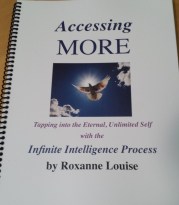
fullsizeoutput_2cAnother way to resolve your malaise is to just focus on a question in meditation or self-hypnosis and let it roll around in your mind without needing an immediate answer. I do this through the Infinite Intelligence Process, which is a modality I have put together in a book entitled Accessing More – Tapping Into the Eternal, Unlimited Self with the Infinite Intelligence Process.  

Under the section called ‘Connect’, there is the opening phrase, “There’s a part of me that knows _____, and that part is _____ (guiding me now, bringing that information into conscious awareness, assisting me to do this in a way in which I am really pleased, etc.).” Here again, just allow yourself to drift into a meditative/self hypnotic state. Hold the question in mind without needing an answer. Over time, your subconscious mind will bring things to your attention, and synchronicities will occur.

Below are some sample questions to ask: 

  • Why am I feeling ____ regarding ____?  
  • What is underneath this feeling of _____?
  • If I could support myself anywhere, where would I want to live?
  • How could I support myself living in ____ (name of location)?
  • How could I support myself doing ____ while living in ____?
  • If I could support myself doing anything I like, what would be most satisfying to my soul? 
  • What does my spirit want to do ____ (now, short term, long term, as my life’s work)?
  • What kind of work can I do right now that would help me to eventually be able to do/become ____ in the future?
  • What kind of work is most in keeping with my soul desired life’s path?
  • What kind of work combines my main interests and abilities?

Writing Dowsing Charts and Checklists

Finding the right answers starts with asking the right questions. 

In my opinion, dowsing is the fastest way to gather information, determine the underlying dynamics, and solve problems of any sort. Start with writing down your question on the top of a page. Next, brainstorm possible answers in a list format or spread out in a fan or circle format. Include the word ‘other’. 

If you are working with a list, then turn the page to the side so the widest part of the page is on the horizontal line. Without looking at the words, but either with relaxed eyes staring into space, or focused at the bottom of the page, hold the pendulum in your hand and let it pull your hand in the direction of the appropriate line. Then look, and read what it says.

For example, if you were trying to figure out your emotions, you would list possible emotions, including the word other. Then you would ask:

  • What is the main reason I am feeling ____ about ____?
  • What is the next main reason I am feeling ____ about ____?

Continue, until there are no more emotions indicated. 

Next, because emotions come from beliefs, judgments or thoughts, write a list of possible ones, such as “people should (or shouldn’t) do ____”. Then dowse:

  • What is main thought or judgment underneath this feeling of _____?
  • What is next main thought or judgment underneath this feeling of _____?

Keep brainstorming and dowsing until you have a complete picture. Then work on addressing/healing any issues uncovered. Some of this work will entail straight forward problem solving, such as the below:

  • Who can help me with ____?
  • What are my next steps? (dowse out priorities)
  • Is anything preventing me from moving forward with this?
  • How motivated am I to do what it takes to accomplish this goal? 
  • Do I have any fears or limiting beliefs that ___ (are likely to, could) sabotage me in achieving this? If you get a ‘yes’, brainstorm what they might be and dowse out.
  • How can I make this required task easier, interesting or even fun?

Working below the level of conscious awareness

In some cases, you will not identify the cause of your malaise or failure. I then suggest  turning over the healing/resolution to what some call the ‘healer within’ or one’s spiritual dimension. I do this again with the Infinite Intelligence Process as listed earlier, “There’s a part of me that knows… and is doing so now.”

But there is another part to that process that is called “Process”. It installs a stress management program either with dowsing, meditation or hypnosis and then turns the healing over. For example, “From the perspective of my High Self, process and ____ (heal, clarify, release, resolve) ____ in a way in which I am really pleased.” If I am doing this with dowsing, I add “Take action now with the pendulum, and let me know when it is complete.” Both techniques are fully described in my book Accessing More–Tapping Into the Wisdom Within with the Infinite Intelligence Process.

In conclusion,

Overcoming malaise and obstacles in reaching your goals is made infinitely easier when you have a big enough ‘why’, when they are your goals, and you work with your inner resources every step of the way. I look forward to hearing about your own journey.

Copyright 1/9/2019 by Roxanne Louise. However, this article may be shared in other free online sources only if this copyright notice and links to http://www.roxannelouise.com and http://unlimitedpotentialhealingcenter.com are included with the content.


When You Are Triggered…

With todays highly charged politics and a media that panders to fear and sensationalism, it is easy to get triggered. Already stressed out with the pressures of your own life, and overwhelmed with everything you need to do to keep your life afloat, you may find yourself emotionally worked up over someone else’s life or problem because it resonances with something deep inside of yourself.

Because of your own history and sensitivities, you may automatically sympathize with one person, group, issue or cause you think is a victim of injustice, and get violently angry with another you prejudge as aggressor frequently before you know all the facts and even despite the ‘facts’. That is because your emotions are really about you and something similar that has happened to you, your loved ones, ancestors or tribe in this lifetime or the distant past that was never resolved, healed and put to rest. 

Whether you are particularly sensitive to the slightest hint of racial, religious, gender, tribal, national or ethnic prejudice, the trauma and injustice of the past may be hard wired into your DNA. You may have absorbed and taken upon yourself the injustices done to your ancestors long since dead (even generations or centuries dead) as if it happened to you personally.  

A sure hint that the root cause of your upset lies within yourself is when your emotional reaction is excessive to the current situation, when you can’t let it go, when it doesn’t really effect your personal life, and when it happened long ago, perhaps even before you were born.

Every emotional reaction you experience, every evil and type of  injustice that exists today, has occurred before, many times over, and often, many times worse. But because it is occurring again, you suffer much more than perhaps the current situation warrants. If you can heal the prior occasions, your reaction will be only to what is happening now, not added on top of what happened years, generations or lifetimes ago. 

What to do about it

When you are triggered by events whether personal, local, national or global, try to:

  • Identify the issue or type of event. Name it.

List some possibilities on paper. If you know how to dowse, then ask if you have any stuck energies on that issue, and the percentage or the degree to which you do. If you don’t know how to dowse, then quiet your mind, and in meditation start asking some questions. Suggestions are below.

  • What is underneath this upset?
  • Where did it come from?
  • Did it originate with me or with my family, my ancestors, my tribe?.
  • Show me the root cause.
  • What wisdom can I extract from it?
  • What positive things can be gleaned?
  • How can I use this situation to grow, to be a better person?
  • How can I turn it into a blessing for myself or others?
  • How can I look at this situation so it doesn’t bother me nearly as much?
  • What is the big picture here?  

Hold a willingness to look honestly at yourself. Intend to extract some wisdom or value from both the current event and any experiences of a similar nature. That learning can include an understanding the underlying dynamics, why something may have happened, and perhaps an idea to prevent it from happening again or lessen that possibility. It might mean noting that changes need to be made within yourself even if changes are needed within the larger community.

  • Rather than immediately assigning blame of who is wrong and needs to be punished, consider that what you judge may also reflect a quality inside yourself.

Doreen Virtue taught me to say: “I recognize and forgive in myself what irritates me about you.”

This is related to ‘the shadow self explained at length by psychiatrist, Dr. Carl Gustav Jung and author Debbie Ford. The ego avoids self loathing by denying the existence of faults within the self while projecting those same faults onto someone else. There is a theory that when internal faults that are hidden, ignored, or denied, that this will attract people who share these faults as the soul’s attempt to get you to look at yourself. As you admit your own faults and forgive yourself, you will have greater tolerance of others. Even better, as you heal those faults, you will more likely attract others who have likewise worked on healing their own issues.

The ancient Hawaiians had a practice of forgiveness and reconciliation called Ho’oponopono.  This practice was later simplified by Dr. Hew Lin and popularized by Joe Vitale. In the original practice, a shaman and members of the family or community would gather around a person and take responsibility for what had happened to or by that individual, and ask for his forgiveness. While he was a  prison psychiatrist, Dr. Lin would sit with the file folders of various inmates and repeat “I’m sorry. Please forgive me. I love you. Thank you.” This was done over a period of time without actual inmate contact. Yet this simple practice resulted in such improvement in these prisoners that they were later released.

If practicing Ho’oponopono without relaying that information to an individual still has a positive effect upon that person, it may because of quantum entanglement. While the idea taken from physics of quantum entanglement refers to the interaction of particles at a distance, some think that this interaction extends to humans as well – that everyone and everything is somehow intertwined. Is it too far a stretch to think that what happens to you effects me and vice versa, and maybe even what I think and feel effects you and vice versa? If so, then if you want to change the world, start with changing yourself.

However, if you also believe that changes have to be made within the community and it’s systems or the larger systems outside your locale, take some constructive action because it will go a long way to healing your upset.

  • Focus on what you can do of a positive, practical nature locally to start the process. 
  • And, again remember that the changes you would like to see in the world involve making changes within yourself.
  • Meditate or dowse to transmute any trauma or upset you personally suffered recently.
  • Clear any other experiences you remember from your past.
  • 20170516_acc-morecover.jpgHold the intention to clear any other experiences you do not remember whether in this lifetime or another.
You can do this through hypnosis, meditation, the Emotion Code, or the Infinite Intelligence Process that I developed. See my book, Accessing More for instructions on how to do this.   

  • Clear those upsets/issues of a similar nature of your ancestors in this lifetime or another, and that experienced by your tribe.


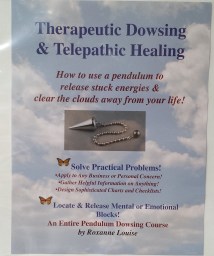
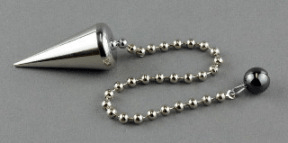
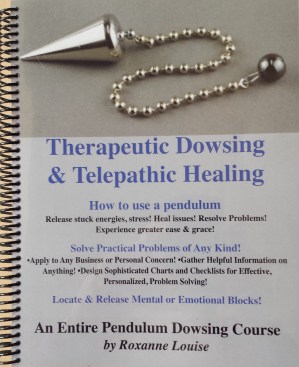
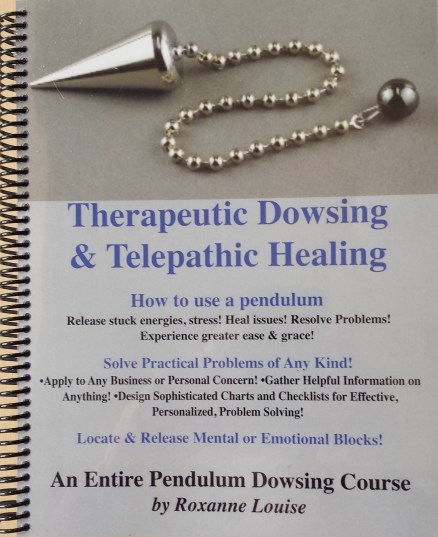
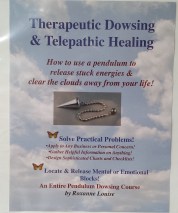
Again, you can do this through the Infinite Intelligence Process, the Emotion Code by Dr. Bradley Nelson, or through dowsing (see my pendulum dowsing manual, Therapeutic Dowsing and Telepathic Healing).

  • dowsing cover front
    R
    efocus on the positive opposite that you would like instead.
  • Finally, take action no matter how small to move towards what you would like to see in the real world.  

Recent Example

Let’s take the high emotional charge attached to the Kavanaugh proceedings. I bring it up only because it was recent and because I found myself being triggered. I will not discuss the politics or merits of either side, but rather illustrate how to take any triggering event to recognize and clear non-beneficial or stuck energies within yourself. This is important because if you are being triggered, you cannot be objective or think clearly,  sleep easily, enjoy peace of mind or anything else until you do heal, transmute, rebalance, or clear it.
There were multiple possible issues here. If you were triggered, you might ask yourself, if you are carrying any unresolved, stuck energies of your own from this or any other lifetime, or if you are carrying those of an ancestor, loved one, or tribe.
Ask the following questions one at a time starting with “have I ever …..?” After you are finished, repeat the same questions with ” have any of my loved ones..?” Next, ask “am I carrying any trauma from my ancestors regarding….?”
  • Have ____ (I, my loved ones, ancestors) ever been assaulted or lived in fear of same?
  • Have  ____ (I, my loved ones, ancestors) suffered sexual abuse, rape, or fear of same?
  • Have ____ (I, my loved ones, ancestors) been a victim of violent crime?
  • Have ____ (I, my loved ones, ancestors) suffered greatly because of not being believed, but rather ridiculed or punished for speaking up about some wrongdoing?
  • Have ____ (I, my loved ones, ancestors) suffered greatly because of not being heard or fear of not being heard because ____ (I ___ am/was), they ____ (are/were) ___ a (man/woman, member of lower standing caste/group/tribe)?
  • Have ____ (I, my loved ones, ancestors) ever suffered after being falsely accused of some misdoing, crime or serious violation?
  • Has ____ (my, my loved one’s, ancestor’s) reputation, business, standing in the community been destroyed because of false accusations perhaps through politics or someone else’s dislike or personal agenda? 
  • Have ____ (I, my loved ones, ancestors) received threats or  ___ (suffered, been captured, imprisoned, tortured, or killed) because of false accusations?
If so, then in  meditative state, hold the clear intention as follows. If you know how to dowse,  then work with a pendulum to indicate your progress. 
  •  “There is a part of my being that knows what positive learning I can extract from any this experience of ____ that ___ (I/they) have suffered (or was afraid of suffering). Take action now, and let me know when that is done.
  • “There is a part of my Being that knows if I or anyone close to me in this or another incarnation have ever suffered _____ or lived in fear of suffering ____. And that part is extracting the positive learning from each and every one of those experiences so that it is unnecessary to ever experience it again. Take action now, and let me know when that is done.” dowsing cover front
  • There is a part of my Being that can transmute, heal, and clear all trauma attached to each of these experiences that I and my ancestors have had, so that there is no longer any need to attract more of these experiences. Take action now, and let me know when that is done.”
  • Envision the positive opposite in the future as if it already exists. Follow this with powerful affirmations statements while meditating or dowsing.


  • There is a part of my Being that knows what is mine to do to create a world where _____(there is trust and mutual respect) and is guiding and motivating me to take appropriate steps now.
  • or “There is a part of my Being that chooses to create a world where _____. And that part is working on it. Take action now, and let me know when that is firmly in process.”
  • “There is a part of my Being that knows who else might benefit from any of the healing we have done today and is reaching out to their High Self to duplicate whatever is useful in the way it is helpful and only helpful. Take action now, and let me know when that is done.”

Copyright 11/2018 by Roxanne Louise. However, this article may be shared in other free online sources only if this copyright notice and link to http://www.roxannelouise.com and http://unlimitedpotentialhealingcenter.com are included with the content.


You can dowse!

image 

Dowsing is the art of quieting the mind and turning inward to deliberately seek very specific information, which while not known consciously is nonetheless available in the vast sea of consciousness in which all information is already known and everyone is connected. 

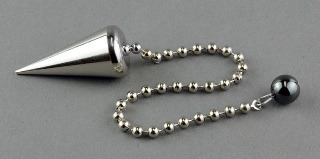
Sometimes called water witching, rhabdomancy or radiesthesia, it is an natural form of divination to which everyone can learn to develop. The body reacts to the answers of questions asked with subtle body sensations or movements, which are clearer when using tools such as L or Y rods, bobber or pendulum.

Your body already senses and knows things unconsciously 

Perhaps you remember a time when you had strong gut feelings that correctly warned you of potential danger, or encouraged you to take action and proceed. Perhaps you have been somewhere that had strong good or bad vibes without knowing the history or the people of that place. Maybe you walked into a room and felt immediately uncomfortable although you were completely unaware that an argument had just taken place or that the occupants hated one another. 

I remember visiting the home of Jiddu Krishnamurti, an Indian philosopher and writer, in Ojai, California. Now while I was aware that he practiced meditation and wrote books, I knew very little about him. And while I am by nature a serious person, I could not help smiling broadly throughout the site. The house and grounds exuded enormous joy. 

My point is that your body has been sensing things right along, and that inborn ability with training and practice can give you good information upon demand with or without a tool such as an L or Y rod, bobber, pendulum or forked stick. 

Body Dowsing – the Sway Test

The body itself can be used as a dowsing tool. Here’s how.

First drink some water as dowsing works best when you are hydrated. Stand up and separate your feet comfortably apart. Hold an intention of your body moving in a particular direction when the answer to a question that you ask is ‘yes’. Close your eyes. Without being rigid and stiff, but without deliberately moving either, allow your body to show you it’s ‘yes’ response. Internally say “show me ‘yes’ “. Keep repeating until your body moves and note the direction. Then ask your body to indicate the direction for ‘no’. “Show me ‘no’ “ Unless their polarity is reversed, ‘yes’ for most people is indicated by leaning forward, and ‘no’ by leaning backwards. It may be subtle. Practice until it is a clear response.

When you have a distinct direction for each response, then ask simple questions to which you know the ‘yes’ or ‘no’ answer. For example, “my name is ___ .” “I live at ____.” From there you can go on to simple other things for which you can verify after dowsing. For example, “how many quarters are in my wallet?” Then ask “how many nickels? “How many dimes?

Uses of Dowsing

While dowsing is an ancient practice to find water, oil, ore or minerals such as gold, it can also be applied to health, agriculture, business, relationships, forensics, military, and problem solving of all kinds. It can be used to find missing persons, pets, objects, unexploded bombs, unmarked graves, the best location for a home or office, an effective marketing or business strategy, and the best use of your time, energy and resources. It can be used to develop a comprehensive self-care program. It can locate the root cause of issues or problems and determine the best way to address them. However, like everything else, it requires training and practice to do skillfully. But the benefits are well worth the investment.

My passion is in using pendulum dowsing for mental and emotional healing both for myself and my clients.  I have adapted it to the hypnotherapy practice and will be teaching hypnotherapists as well as other mental health professionals how to apply it for that purpose an all-day workshop,  “Therapeutic Dowsing and Telepathic Healing” on Monday, April 29 at the upcoming Heartland Hypnosis Conference, in St. Louis, Missouri. 

logo4

dowsing cover frontOTHER RESOURCES:


Why should Hypnotherapists and others should learn pendulum dowsing?

20190411_dowsing cover


Pendulum Dowsing locates issues very fast. It allows you to quickly grasp the broader dynamics so you become more comprehensive and effective!

This translates into greater productivity and client satisfaction, and enhanced reputation, more referrals, and greater job satisfaction for you.


Benefits of Dowsing:

  • Rapidly locate the root cause and other factors involved in any issue even before a client walks in the door!
  • Pinpoint what needs to be addressed before the intake interview! This can guide the intake process itself by knowing what questions to ask!
  • Establish priorities and a treatment plan!
  • Track client acceptability of various hypnotic interventions and proper pacing!
  • Set up a strategy for problem solving of any kind – personal or professional!
  • Clear causative factors or determine a strategy to do so!
  • Determine the client’s subconscious motivation to solve his problem/reach his goal, do his part to help himself!
  • Quickly determine where a client is stuck and use dowsing to clear it!
  • Use for marketing strategies, finding an office, and a host of other practical business matters!
Dowsing whether done using a forked stick, L-rods, bobber or pendulum is a wonderful way to tune into the vast information stored in the unconscious and superconscious mind. While historically been used to locate water, gold and ores, and more recently applied to locating missing persons, pets, objects such as unexploded bombs, it can be used for literally everything INCLUDING every aspect of your client work, business and personal matters.
As a hypnotherapist, I use it extensively to locate and clear stuck energies, both for myself on a regular basis, and for my clients. Stuck energies include mental and emotional issues and upsets that have piled up and make dealing with current issues, staying healthy or healing if you are ill, achieving your goals, and living your life with enthusiasm and abundant vitality much more difficult. So freeing up this energy is vital to all areas of your life. It includes not just the unpleasant memories but also the negative beliefs and judgments about those events that continue to color your world and limit you in multiple ways including resolving it effectively.

How does energy get stuck?

Basically, energy gets stuck when it is unprocessed. Perhaps when an upset occurred, you or your client didn’t know how to deal with it and, therefore, didn’t. Perhaps you were too young. Perhaps you didn’t have the skills, or the awareness of what you were registering on an unconscious level. Perhaps your family, culture or religion taught you to deny and not express your thoughts and the resulting emotions. So you may have stuffed your feelings instead of quickly resolving them thereby avoiding future issues.
On the other hand, even if you had the awareness of the importance of resolving issues and even the therapeutic skills, you may have had neither the time or energy to do so. This frequently happens during a crisis, ill health, or overwhelm. By the time the emergency passes, you may be so busy on catching up on other needed tasks, that you lack any interest in going back to dealing with past unpleasantries.

The Unpleasant Wake-Up Call

As you are aware, unprocessed negative emotions and the non-beneficial thoughts have a way of surfacing as illness, insomnia, nightmares, relationship issues, increasing irritation, explosive bursts of anger, depression, malaise, and problems of all types. Consequently, it is important process them as quickly as possible. However, many times what you think is resolved does not stop the negative repeating pattern. This indicates that you never addressed the root cause or other important factors.

Dowsing can help!

This is where dowsing is profoundly helpful to locate what you missed. Yes,  you can do hypnotic regression work, or unconscious healing modalities, but all are very time consuming and require the assistance of someone else (if it is for yourself). Here is where you can do powerful self-healing as well as cut to the chase with your clients as well.

Roxanne has written an entire course manual pictured below. Available through her website, www.RoxanneLouise.com.

20190411_dowsing cover


More

What if illness was sometimes a choice?


Introductory Note:

Nowhere do I mean to imply that all illness is a choice or that it is conscious. There are many factors that are beyond what any one person can control such as their dna, the health and nutrition of their ancestors, early childhood nutrition, unavoidable exposure to trauma, toxins in food, air, water and more. And ultimately all bodies break down over time and die.Santa Cruz Vending 7:16 copy

But I want you to consider where you do have control. As you become aware of things you can do, but do not take action to do something, then the question becomes, “why not?”

————————————————–

TO BE OR NOT TO BE — SICK 

Putting forth the premise that illness is a choice may sound harsh. But think about it this way:

Long before you got sick, you were entrenched for years in hundreds of little habits–habits of eating, exercise, work, lifestyle, smoking, drinking, and habits of how you handled stress, conflict and negative emotions. Even your thinking has been largely a matter of habit. And because thoughts determine emotions, which in turn create different biological chemicals in your body, emotional states and body chemistry are the results of thoughts, beliefs, judgements, and habits of mind. And that involves choice – both conscious and unconscious.

Regardless of what habits or beliefs were installed in childhood by family or culture, upon reaching adulthood, it becomes a choice to continue those habits and to hold those beliefs without question, or not. It comes down to whether they work for you or whether negative consequences appear that call for change.

Choices become habits, and habits create destiny

All habits come about through little decisions made again and again, perhaps multiple times daily until they become an automatic program that starts to run your life. Allowing thoughts to continually be held in mind is a choice, and this choice then becomes part of your attitude and personality [see work of biologist Bruce Lipton, Ph.D.]. 

Further, your beliefs, judgments, and interpretations of events and experiences collect evidence to prove you right. Left unchallenged (a choice), they will either attract more similar experiences or you will tend to feel and react as if they were similar even though they were not.

These mental habits will guarantee what emotional and physical consequences you experience both immediate and long term including illness. For example, if you interpret a situation as ‘this is scary’, you will activate the stress hormone of cortisol, which shuts off the biological functions of growth, digestion, repair and immune functioning. Whereas if you interpret the very same event as ‘this is exciting’, ‘this is an opportunity’, or ‘what a fun challenge’, your internal chemistry will be very different.

Routinely interpreting what is happening around you as threatening will over time damage your health.  However, you can choose to interpret or judge a situation differently, to react differently. Following a decision to do so, and then practicing over time to retrain your mind, might make the difference you need to heal.

Consequences

So there are consequences to all of your choices and the habits they become. And these consequences include your health, mental and emotional well-being, or lack of same.

However, at the time that the choices were made, you may have been unaware of those consequences or you lived in denial. After all, when you picked up your first cigarette were you really paying attention to the health risks? Did you think that you were invincible? Did you think you could outrun the bullet, and that the health warnings didn’t apply to you? Did you just figure on having just a few, and quitting tomorrow? Were you bargaining, “please, God, just let me have this one ___ (cigarette/drink/ice cream sunday) and then I’ll stop and be good!

Now, years later you may become aware that it has come time to pay the piper. What do you do when you don’t like the negative consequences of your choices? How do you unravel bad habits, bad decisions, limiting beliefs or judgments for which you are now paying dearly?

Making different choices

Healing requires change, and change can be scary.

If a health problem is a result of long standing habits and patterns, healing will always require changing those habits and patterns. The necessary changes may be all pervasive, even drastic, and can be just as scary as the illness itself.  Carolyn Myss in Why People Don’t Heal and How They Can, says that

“many of us are almost as afraid of healing as we are of illness.”2 

Even though a person may be aware of the risks, and their doctor may have recommended dietary, habit or lifestyle changes over the years,

only when there is a clear cause and effect relationship of certain habits and choices with the negative consequences do most people begin to make even the smallest, yet alone the big changes, that may be necessary.

This follows the Law of Inertia, a body at rest tends to stay at rest, and a body in motion tends to stay in motion.

It takes more energy to shift direction than to continue to do what you have always done.

And it will take dedication on a daily basis to overcome the years of negative programming. However, each day you choose to practice new habits, it will gain in power.

How committed are you to heal?

Are you willing to do whatever it takes? And if you aren’t, can we then say that you are choosing to remain sick? Myss asks the following:

“If healing required moving to another part of the country, changing your attitudes toward others and yourself, changing all your physical habits, such as diet and exercise, being alone for a long period of time, or going on a retreat to confront your shadow, experiencing illness as a way of healing mentally, emotionally and spiritually, or losing everything familiar to you — home, spouse, job–would you do it?” 3

John Harrison, MD, in Love Your Disease–It’s Keeping You Healthy says that

Anybody prepared to make fearless decisions in their best interests will avoid all major illness and most minor ones as well.”

Illness provides benefits called secondary gains

There may be positive payoffs to being sick. For example, illness may get you out of a job, activity, situation, relationship, or a responsibility that you hate. It can provide an excuse not to do, or not to go where you don’t want, or to do something that you do, for example, to stay home and watch television. It may provide financial awards, temporary or ongoing income, medical benefits, and time off from work. [See article “Secondary Gain – a Gain from Pain”

Illness may get people off your back. It may provide an excuse, and special considerations or privileges such as handicapped parking. It may allow you to avoid responsibility for yourself or others. It may cast the die–letting the disease or condition make a decision for you when you are too indecisive or weak to do it on your own.

Illness may pull a family or relationship together, or provide a way to check on the feelings of others. It may let others know that you need them, providing them with an important role, and helping them to feel good about themself for helping you. Illness can be a way to get people to come to visit, and to obtain desired attention, emotional assistance, concern, sympathy, demonstrations of caring or love. It can be a way to get people to do things for you, even getting waited on hand and foot as in hospitalization. Finally, a health problem can be a form of self-punishment, a way to atone or pay yourself back for guilty thoughts, feelings, behavior.

Because of all of the above, a person on an unconscious level may choose to become ill, or to do things that make him liable to get sick. Once sick he may obstruct healing, or do all the wrong things such as a diabetic eating sweets, to sabotage getting better. 

As Myss says, 

Illness can…become a powerful way to get attention you might not otherwise receive”, and “as a form of leverage, illness can seem almost attractive.”

Benefits to illness can be secondary or primary to the condition. They can be conscious or unconscious (below the level of awareness). As in which came first, the chicken or the egg, did the person get sick in order to get his needs met? Or did he get sick as a result of bad habits or some other reason, and then notice that there were some payoffs in being ill?

Harrison says that

The person is needy, rather than sick….People get ill to get what they want… People do not get what they want…so they become ill.”5

Basic needs,  such as attention, solitude, caring, must be met one way or the other. And if illness is providing those needs, the person must feel secure in meeting those same needs, just as easily as before, but now in a healthy, constructive way. Otherwise, he will resist getting well, or he will get sick again to get his needs met.

A Wake Up Call + Hope

To break the negative cycle, both the pain of the illness needs to be great enough for the person to be motivated to change, and the person must have hope that making changes will make a positive difference in his health.

Without hope or positive expectancy, why bother to even try?

Harrison further states that

“Disease is both self-created and self-cured…. Illness is the physical and psychological result of unresolved needs, not a malfunction of a machine caused by unknown or external factors….We give ourselves illnesses in order to ‘take care of ourselves’ psychologically.”

Harrison and Stephen Parkhill, author of Answer Cancer, refer to an unspoken contract between doctor and patient that says the following. The doctor, in exchange for money, will remove unpleasant symptoms for the patient without upsetting the patient’s chosen lifestyle or habits, attitudes or feelings, judgments or beliefs. The doctor will participate in the illusion that the patient is a victim and not responsible for either the disease or its removal and return to health. The doctor will take over responsibility for the patient’s health and all decisions relevant to his health care.

Harrison puts it this way:

“I have consulted you to have my need recognized, my suffering validated, my pain removed and my disease retained. In return, I will support you financially and give you status commensurate with the powers I ask you to exercise.”6 

As Harrison further states,

“It’s this need to be taken care of by people more powerful than ourselves that leads us into taking some decisions that are damaging to us in the long term.”

This agreement between doctor and patient may eradicate symptoms, but miss the cure. It has all the dysfunctional psychodynamics of the Victim-Rescuer-Persecutor Triangle7 –the patient being the Victim, the doctor/therapist being the Rescuer, and the disease/condition being the Persecutor. Roles can switch if compliance in the game is unsatisfactory.

Patients need to get out of the game and take back responsibility for their illness, and take back their power to heal. But in doing so, they need to understand the role that not just their physical habits and lifestyle play, but the all important component of their thoughts and emotions.

What emotional states cause illness?

Parkhill believes that ailments in general come from an unconscious need for self-punishment, self-mutilation, or limitation. He also feels that guilt, blame, criticism, fears, such as the fear of abandonment, or the fear of not surviving because essential needs are not well met, play a role.

To his list, I would add that many other emotions and internal conflicts could be involved depending upon the illness and where it is located. German New Medicine outlines a number of emotional shocks that if are not quickly resolved lead to very specific diseases. [See article “German New Medicine & the Mind-Body Connection”]

Louise Hay, author of You Can Heal Your Life, thinks that thoughts of being not good enough, self-hatred or criticism, resentment and guilt are the most destructive to our health. Conversely, she feels that forgiveness, self-acceptance, love and releasing the past are key for healing.

Unraveling Bad Choices and Making Better Ones

Postulating that illness is a choice, even if it is an unconscious one, implies that there is a different choice or choices that could potentially be made that would leading to a different outcome–one of health, vitality, and overall well-being. Once clear about the negative consequences of all of your habits and patterns, you may be motivated to change. This will include making changes in your thinking, beliefs, attitude, how you deal with stress, as well as diet, lifestyle. 

Make a commitment to take positive action. Start with making the most obvious and the most do-able changes, and the changes most likely to make the most difference.

There are many ways of tackling the various mental, emotional and habit components.

  • Self-hypnosis really helps to focus on priorities, increase motivation to do what you need to do, change negative thinking, and to release stress. 

The modalities or techniques listed below are also invaluable in releasing stress, self-sabotage, and healing issues. Dowsing, Emotion Code, Hypnosis, and NLP have the additional benefit of being able to locate the source/s of the problem.

  • Thought Stopping and Switching 
  • Emotional Freedom Technique
  • Emotion Code
  • Tapas Acupressure Technique 
  • Hypnosis
  • Neural Linguistic Programming 
  • Pendulum Dowsing 
  • my own Infinite Intelligence Process8 [see article “Accessing More”] 
  • Through hypnosis or Time Line Therapy you can go back in time to a choice point and make a healthier, more constructive choice that leads to health. I like the unconscious healing modality that I call “Change Decision”9 that taught to me by A.L Ward, but those of other hypnosis mentors such as E. Arthur Winkler or Walter Sichort and his protege James Ramey, who did something similar.
  • Next, you can imagine traveling into the future to a time when the problem has been satisfactorily resolved, find out how that was done, and bring that solution back to the present moment along with the resources to do it. This is called Future Pace, or Crystal Ball, or Magic Wand — all hypnosis and NLP techniques.
  • Or again with hypnosis, you can imagine going into a parallel universe in order to change direction to an alternate reality more of your liking. Go the station platform and change trains.

===========

FOOTNOTES:

1. First published in 5/2007

2. Why People Don’t Heal and How They Can, page i x.

3. Ibid, page 138-139.

4. John Harrison, M.D., Love Your Disease, page 51

5. page 46-7

6. Love Your Disease, page 59

7. The Victim-Rescuer-Persecutor Triangle is typically seen with alcoholics, drug addicts, gamblers, and many of the chronically ill. The Victim uses his problem to manipulate and control others into taking over responsibility for him, bailing him out of problems, and meeting his emotional and perhaps financial needs. The Rescuer initially feels good to be of help, but later comes to feel as if he, himself, is being victimized by the very person he is trying to help, who has takes on the role of Persecutor. Rescuers are caught in this trap because they do not feel good about themselves unless they are helping those they consider more unfortunate than they. Most people in the helping profession as well as nurses and others in the healing arts start out as Rescuers. Hence, they are vulnerable to being used and abused by others. Awareness helps, but the biggest cure for this is high self-esteem and healthy boundaries.

8. ACCESSING MORE – Tapping into the Eternal, Unlimited Self with the Infinite Intelligence Process by Roxanne Louise

9. Change Decision is included in the Visualization Chapter of my book, Your Unlimited Potential, a complete self-hypnosis course and introduction to professional hypnotherapy.

=======

“Illness as Choice ?” Copyright 7/2015 was then expanded and rewritten 6/2018 as “What if illness were a choice?” by Roxanne Louise. However, this article may be shared in other free online sources only if this copyright notice and link to http://www.roxannelouise.com and http://unlimitedpotentialhealingcenter.com are included with the content.

FOR MORE INFORMATION: see our main website: http://www.roxannelouise.com or call 434-263-4337


Getting to the Root of It

Anyone who has dealt with weeds knows that unless you can dig up the taproot, the weed comes back. And anyone who has gotten a splinter, knows that until you get it all out, the pain continues. Get only part of it out, and it becomes inflamed and perhaps infected. Thinking positive, ignoring it, or trying not to think about it only prolongs the problem and make it worse.

 And so it is with negative repeating patterns. Any time there is a negative pattern of any kind, you can bet that the root cause has not been addressed. The only way to change things and stop the same problem occurring over and over again is to find and clear the original issue, which will be the unhealed trauma and the negative belief or judgment about the experience.

If you are successful, you will probably not get any more such experiences, or at least, less of them. But should something similar happen again, it’s effect upon you will be greatly mitigated, and you will much more quickly, and with greater effectiveness, grace and ease handle it in a better way. While the annoying people in your life may not have changed, you will have. Therefore, your experience of it will be different. Because you think differently about things that used to bother you, you feel and respond differently.

Getting to the bottom of issues can be tricky and time consuming.

The original event and the interpretations about it may be unknown, long forgotten or repressed. And instead of just one traumatic event, it may be a layering of multiple events, each reinforcing the detrimental judgment that with a self-fulfilling prophecy that tends to 

    • either attract more experiences of like kind,
    • Or you just react and feel as if they are the same type of event even if they are not. In other words, you perceive and feel ____(slight, insult, prejudice, etc.) because you are sensitized, not necessarily because it was intended or actually happened. 

Healing requires not only taking corrective action in the moment, but learning from the experience. Through strong intention, you can decide that the very experience that upsets you will enhance your personal and professional growth, adding to your wisdom, your maturity, and your greater value to others as a leader, counselor, mentor and role model. I call this ‘finding the blessing’.

It is not enough to just neutralize the negative emotions.

Learn and grow through them as well. 

But then go further. 

Ask yourself, “has anything like this happened before?” 

If you get a ‘yes’, then your current problem is alerting you to the need to heal these earlier issues now, and perhaps other related additional ones that you don’t remember. If you do find and heal the root cause, the negative pattern will stop. And if that happens, then go and personally thank the person who is your current ‘pain in the butt’, the one that brought the issue to your attention and motivated you to address it.

Layering of memories

We are hard wired as part of our survival mechanism to put meaning to experience – to interpret it as good or bad, threatening or not. It is the interpretation, not the event itself, that determines the emotion that follows. Perhaps you had an upsetting experience and then made a judgment about it, an interpretation of what it meant to you that you forgot or repressed. Perhaps it was never verbalized, or didn’t register consciously because it happened at a young age, in the womb, or in a past life.

We now have scientific evidence from studies done with mice and children of Holocaust survivors that issues and emotions such as fear are being passed on the DNA to the generations that follow. This may be part of the survival mechanism for the species.

But not only can you pick up things up unconsciously from your ancestors in that way, any vividly imagined events especially those with high emotion can register on an unconscious level as if they actually happened to you even if they did not. This includes the stories you hear from your family, your culture, group, or witness in the media. It can include those experiences of book or movie characters that make a deep impression. All of these elements become part of the soup making up your beliefs and judgments, which go on to create or at least influence your future experiences and it’s impact upon you.

Regardless of where or when it originated, it and others like it are stored internally and can effect you until you process or reframe them. Reframing is changing your interpretation of the event.

For example, after a bad accident, you might continue to shake with fear thinking “I almost died”, but you could also interpret it as “if I’m still here, I must have a purpose,” or “I survived and I’m going to celebrate every day because you never know how long you have, or ”I was protected” or “help was there precisely when I needed it.”

As more and similar experiences occur over time, they are added to the previous ones making the event, the emotions and judgements around them more pronounced like a toe that keeps getting stepped on until it becomes very sensitized and you become over zealous in protecting it.  The one-time judgment about someone stepping on your toes then becomes a generalized global judgment, such as “everyone keeps stepping all over me”, or a sensitivity or issue as in “I have constantly be on the alert that no one steps on me again.” 

Triggers and other factors

But along with the experience that is logged into your memory bank, so are the various elements of that experience – the sounds, colors, location, season, date, and the various people and other things present. Each element is capable of triggering the entire memory and the emotion connected to it. Such elements are labeled triggers. But in addition to the elements present at the time of the experience, you can also react to other things not involved in the bad experience itself, but merely associated with the person, places or things that were involved.

For example, if you have a bad breakup with your boyfriend, you can understand why you to feel uncomfortable should you bump into him again. But now you may very well experience discomfort upon seeing one of his friends or relatives, or hearing one of the bands that both of you enjoyed, your favorite song, or being in a place that you used to go to together. Everything you associate with that boyfriend can awaken all the painful emotions and reasons for the break up. These are triggers too.

With some triggers, you clearly know where the emotion such as the fear comes from. But with other emotions, fears, tension or uneasiness, you may not remember the connection. These are more properly labeled as phobias. The fear seems irrational because the connection to the event that caused it has been lost. So it is not just the upsetting event that needs to be cleared, but also all of the triggers, many of which you may be unaware of until they are activated.

Multiple modalities help to find and process the issue.

1. Meditation

One way a person can get clues is through meditation. Just still your mind and let a question roll around in your mind. For example: 

  • “where does this ____ (emotion/ issue/ problem of ____) come from?”
  • Or, “what do I need to know or let go of to heal this issue fully and completely now?”
  • Or, “how can I look at this experience so that it doesn’t bother me nearly as much?”
  • Or, “why does this problem/issue of ___ keep happening over and over again?”

2. The Infinite Intelligence Process 

The Infinite Intelligence Process is a 3-prong modality that I developed. It can be used with meditation, formal hypnosis, self-hypnosis, or dowsing. I use it daily to clear my mind so that I have a restful sleep, quickly process the events of the day, relieve stress, chip away at issues, access internal resources, and, in general, speed up problem solving and make life go smoother. You can learn it through my book Accessing More – Tapping into the Eternal, Unlimited Self with the Infinite Intelligence Process.

You could utilize phrases like:

 “There is a part of my Being that knows where this ___ (emotion/ issue/ problem of ____) comes from and is bringing everything that I need to know into my awareness so that it can be healed/resolved now.” 

Or “There is a part of me that knows how to heal/resolve this in a way in which I am really pleased, and is doing so now.” 

Or after installing the Process Program that is activated with trigger words of process followed by go, you could say:

“From the perspective of my High Self, process and resolve everything to do with the problem of ____ in a way in which I am really pleased. Go.”

3. Hypnosis

Hypnosis has multiple methods of regressing to cause and then resolving the issue. In age regression, the information is brought up into awareness, verbalized in the hypnosis. The client is then guided in reframing or otherwise resolving the issue until it seems complete. My favorite hypnotic techniques are called ‘unconscious healing modalities’ because they operate below the level of conscious awareness and do not involve any verbalization by the client. The hypnotherapist creates depth of trance, establishes an ideomotor response, gets the agreement of the unconscious mind to locate and resolve the issue by itself. The instructions include to resolve the issue “in a way in which ___ (name) is ‘really pleased”.

4. Neural Linguistic Programming (NLP)

Time Line Therapy outlined in a book by the same title is a specific technique within NLP developed by Tad James and Wyatt Woodsmall. It is very helpful to quickly clear issues for which you don’t know the origin. It works below the level of conscious awareness. The instructions include “find the positive learning and release the upset.”

5. The Emotion Code

This method was developed by Dr. Bradley Nelson and works with muscle testing. But I use pendulum dowsing instead to locate the issue and determine the degree to which it is involved. Even if I use a magnet or running my fingers along the governing meridian as he suggests, I will also use dowsing to clear it further, and then check the degree to which I was successful.

6. The Emotional Freedom Technique 

Tap on the issue and everything around it including “Even though I may not know where this _____ (issue, emotion, problem of ___) comes from, I deeply love and accept myself.” 
There are other energy modalities as well to change beliefs. 

7. Dowsing

20190411_dowsing cover

Pendulum dowsing using charts and checklists specially created for this purpose can quickly find the root cause and related factors of any issue. You can learn to do on your own, anytime day or n


ight. No appointment and no wait time is necessary. It can find information that is not accessible either at all or not as easily found another way. It is extremely helpful in all problem solving, but especially helpful when the original cause is unknown, unconscious, forgotten, repressed, picked up in the womb or from the culture or tribe, or even stemming from past lives.

See Therapeutic Dowsing and Telepathic Healing, available on my website.

==========================

4 Upcoming Workshops

Santa Cruz Vending 7:16 copyThis year, I will be addressing finding and resolving root causes of issues from different angles. They are listed below.

Workshop at the Grace Wellness Center, Meredith, New Hampshire, Saturday, April 4, 2020. An all day class, Therapeutic Dowsing & Telepathic Healing”, teaching you pendulum dowsing for locating and clearing stuck mental/emotional issues, as well as practical problem solving for anything. Click here for details.

Workshop at the White Mountain Dowsers in Plymouth, New Hampshire, Sunday, April 5, 2020. A 3+hour workshop on “Discovering Your Unlimited Potential with Hypnosis, Dowsing & Healing Intention”. Click here for details.

Presenting at the HypnoExpo, Orlando, Florida, April 24-26, “Memory- Staying Out of Legal Problems” Seminar, and “The Shadow Knows”. Click here for details.

Presenting at HypnoBiz New York, May 29-31, “Healing Anger Without Killing Anyone!” . Click here for details

Half-Day Workshop at the American Society of Dowsers Convention, Plymouth, New Hampshire, “Heal Yourself to Heal Your World”. See Click here for details.

Presenting at the West Coast Dowsers Conference, University of California, Santa Cruz, July 2-7. Half day Workshop . Details to follow. See http://www.dowserswestcoast.org

Presenting at the National Guild of Hypnotists Convention, Marlborough, Massachusetts, August 7-9. “Heal Yourself to Heal Your World” and“Releasing Anger Without Killing Anyone!”.  Click here for details.

More classes are scheduled elsewhere but with pandemic issues in 2020, things are in flux.

Copyright by Roxanne Louise. However, this article may be shared in free online sources only if this copyright notice and link to http://www.roxannelouise.com and http://unlimitedpotentialhealingcenter.com  are included with the content.


Interview with Dowser, Diane Bull

Recently, I interviewed Dowser, frequent presenter and former Trustee of the American Society of Dowsers, Diane Bull, regarding what she thinks is important that new dowsers understand especially on the topic of Ethics and Etiquette. This is the topic that was addressed in the last Dowsing Support and Continuing Education Teleconference Call earlier this month, but for which Diane could not personally participate as she had a previous commitment. Nonetheless, her input is important on this topic. And so I offer it more fully here.

Diane first directed me to the older version of the ASD Preamble upon which concepts the Society was founded. I quote in part: 

“Dowsing is a faculty employed with intent to expand the perceptive abilities of its practitioner beyond three-dimensional limitations. It is a most ancient, varied craft, as ancient and varied as humanity itself. Dowsing has roots, among all manner of peoples, lands, and epochs. There seems to exist an ageless natural knowledge, that enables us to identify ourselves with an unknown source of being and becoming; it is of primary significance, joining Earth, sea, and stars.” [my emphasis]

Spiritual pride is to be avoided by the dowser. Psychic powers, intellectual aptitudes, or physical skills are useless unless applied for the benefit of allThese may properly be expressed only in an increasing awareness of the oneness of all life and in greater love for the whole of humanity….the power generated in and by a group of interested persons is greater by far than the sum of its numbers.”

The primary point is that dowsing is first of all a spiritual connection. It is a receptivity to the source of being that underlies all. And Diane says that dowsing requires a pure heart and an intention of being of service for the highest good. As it is a receiving function, it cannot be pressured. It is helpful to take a deep breath, stop, center, and connect with your own core. She urges us to maintain a childlike wonder at both the process and the answers. 

Dowsing requires a balancing of humility with strength of conviction. When presenting your responses to others, do so as your ‘opinion’.

While new dowsers tend to want to take care of everybody, they need to check first if they should dowse for someone or about a particular topic. Refer out when you get a ‘no‘. You should not feel pressured to dowse for anyone or anything if you feel uncomfortable. Instead, politely decline.

Young dowsers need to rein in their excitement to want to help the whole world until they are ready. If you think that someone needs your help, find a way instead to offer love that is neither marketing nor interfering.

Diane advises seeing everyone as whole and complete, but cautions in changing another person’s energy field, especially if the energy field is already weakened. Clear the energies in the room, not in the people.

There is strength in numbers when people dowse together as it brings in each person’s strengths. Partner dowsing is also helpful. Agree to work together on the etheric level.

Yet each person’s dowsing responses should still be considered ‘opinion’, not fact. Suspend judgment, and accept one another’s differences. Remember that everyone’s truth is only their opinion. Have compassion for others. If you disagree in the group, find a separate venue to present your opinion instead of attacking the person with whom you disagree.

And above all, in all ways do no harm.

Diane lives with her husband and dowser, Leroy Bull, who also has played a prominent part in the American Society of Dowsers. They now reside in Stamford, Connecticut. Both are most skilled in a multitude of dowsing applications.


Locating & Clearing the Mental & Emotional Drivers of Disease

Chicken or Egg – Which came first?

Both physicians and alternative healing practitioners acknowledge the major role that stress has in breaking down the body’s ability to defend itself against disease. Some such as Dr. Deepak Chopra are particularly insistent that mental and emotional stress plays a part of every health challenge.

While illness causes stress whether through worry, financial expenditures, loss of income while ill, inability to do the things you used to do, time expenditures to figure out and address the problem, etc.,  stress causes or contributes to illness by robbing the body of precious resources such as energy and nutrients to deal with issues that it otherwise would have had for digestion, detoxification, growth, defense and repair.

Sudden emotional shock

Some stress such as the death of a loved one, the loss of one’s home, homeland, livelihood is so devastating that there is a clear connection to physical breakdown.

German oncologist, Dr. Ryke Geerd Hamer, after exhaustive study of 20,000 cancer patients with different kinds of cancer, as well as studying patients with other diseases, found that people with the same diagnosis experienced a similar emotional shock. The results of his work became German New Medicine. His work is extremely interesting and can assist in the resolution of health conditions not addressed any other way. A listing of the emotional shock related to specific diseases is found here. An interesting article an chart of how an emotional shock can lead to cancer is found here.

Slow wearing away of body resources

But while a sudden emotional shock can cause illness, frequently the stress is a slow, steady, cumulative effect of unresolved issues that wear away the body’s resources so that it can no longer muster the strength to protect itself. It may involve beliefs, attitudes, issues, or coping strategies for stress that cause a person to not do what he or she knows to be wise, or to do what he knows to be destructive or risky to health such as smoking.

Genetic factors

While some health issues or vulnerabilities are thought to be genetic, Bruce Lipton, PhD, biologist and author of The Biology of Belief, says that each gene has a dozen or so possible expressions, of which disease may only be one. Rather, Lipton says that it is the environment that determines how a gene will be expressed. And by environment he means how the cell or the individual interprets his environment. For example, is the environment considered dangerous or upsetting? Is it threatening in any way? 

Where do fears come from?

  • Some fears come from direct experience, or more precisely from the interpretation or judgment made about that experience. 
  • Some are promoted by the media
  • Some are adopted from or taught by your culture, family or group with which you closely identify.
  • Some are absorbed in the womb.

For example, if your mother was pregnant with you when your father was away at war, if your parents were young and worried about financially being able to support you, if they were fighting a lot, if your mother was raped or abandoned and going to have to raise you without the love and support of others, these emotions could have been absorbed in the womb. Hypnotic regression has shown this over and over again.

  • Some fears are inherited.

Scientists are now finding that emotions such as fears can be inherited. For example, Scientists at Emory University were able to demonstrate that fear could be deliberately created in a group of mice and then passed down to future generations of offspring. In this study, researchers repeatedly exposed a group of mice to the smell of acetophenone and then subjected them to an electric shock. They then tested two future generations of their offspring and found that they ‘inherited’ a fear response to the smell alone. 

This has implications for humans. As Emory Psychiatry Department Dr Brian Dias has said: “We have begun to explore an underappreciated influence on adult behaviour – ancestral experience before conception.

“From a translational perspective, our results allow us to appreciate how the experiences of a parent, before even conceiving offspring, markedly influence both structure and function in the nervous system of subsequent generations.

“Such a phenomenon may contribute to the etiology and potential intergenerational transmission of risk for neuropsychiatric disorders such as phobias, anxiety and post-traumatic stress disorder.”

A new field called epigenetics involves studying the biological marking of the DNA as a result of personal experiences. This marking can be passed down through future generations.

In a recent article published by The Telegraph, Marcus Pembrey, professor and paediatric geneticist at University College London, said that the Emory study provided ‘compelling evidence’ for the biological transmission of memory. “It addresses constitutional fearfulness that is highly relevant to phobias, anxiety and post-traumatic stress disorders, plus the controversial subject of transmission of the ‘memory’ of ancestral experience down the generations.”

study published in the Journal of Neuroscience used MRI to show that brain patterns inherited from both parents have an impact on anxiety, autism, addiction, dyslexia and other conditions, and that babies born to moms who are depressed during pregnancy are more likely to become depressed as adolescents. New York’s Mount Sinai Hospital discovered that genetic changes stemming from trauma suffered by Holocaust survivors can be passed on to their children.

Before emotion comes experience. And it is the interpretation or judgment about that experience that determines which emotion is felt. For example, the same ski slope can evoke fear in some or exhilaration in others.  It is the interpretations or judgments about the world (safe or scary), about the group (nurtured and protected or not), about the self (worthy or not, loved and wanted or not), that have everything to do with supporting health or disease.  This has been revealed in multiple past life hypnotic regressions.

Hypnotic regression has also found that physical conditions and weaknesses can be carried over from past lives. However, once the relevant traumatic event or events were processed and resolved hypnotically, long-time physical pain or ailments sometimes have melted away.

In Summary

Mental and emotional issues of both the patient and possibly his ancestors, of this lifetime and possibly others, need to be addressed in healing. While a person may know or suspect what stressors are implicated in his illness, a great deal of what caused or contributed to the problem, or is interfering with healing now, may well be unknown or unconscious.

Both hypnosis and dowsing excel in locating and clearing the stuck energies, the related negative beliefs or judgments, and the unhealed trauma (both yours and that of your ancestors). Chiropractor Dr. Bradley Nelson has also developed an excellent method of locating and clearing stuck negative emotions. He calls his system the Emotion Code, and has written a book by that title explaining the process.

3 Summer Workshops Addressing This Subject

At the American Society of Dowsers Conference taking place at the State University of New York (SUNY) in New Paltz, New York, I will be giving a full day Workshop “Locating & Clearing the Mental/Emotional Drivers of Disease” on Wednesday, 6/13. See www.dowsers.org.

Here, we will look at the shocks and internal conflicts that trigger many specific health conditions, the metaphysical meanings of disease, secondary gain, and multiple other ways to dowse out and resolve the major stressors that once complete can free up energy for the body to move back towards health. 

 At the West Coast Dowsers Conference, University of California, Santa Cruz, I will be giving a full day Workshop “Therapeutic Dowsing & Telepathic Healing – Dowsing for Mental & Emotional Issues” on Tuesday, 7/3.  See http://www.dowserswestcoast.org

In this workshop, we will work with a large number of charts and checklists to identify and release stuck energies, extract the positive learning from experiences, and enhance positive energy. This frees up energy that can be applied to physical healing, personal goal achievement, and living your life with greater enthusiasm, joy and vitality.

We will investigate the various ages of your life including the future, key relationships, typical life events, beliefs, judgments, prejudices, addictive thinking, fears and other emotions, repeating negative patterns and habits. While covering all this may seem a formidable task, I will show you a shortcut to cut to the chase of the matter. Not only will you learn how to do all of the above for yourself, but to do so telepathically with others who have requested your assistance.

Lastly, at the National Guild of Hypnotists Convention in Marlborough, Massachusetts, August 10-12, I will be giving a shorter Workshop: “Hypnosis For Mind-Body Healing—Finding And Eliminating The Mental And Emotional Drivers Of Disease”, and a Seminar “Pendulum Dowsing For Hypnotists—Powerful Investigative, Healing, and Business Tool!” ​See https://ngh.net

Copyright by Roxanne Louise. However, this article may be shared in free online sources only if this copyright notice and link to http://www.roxannelouise.com and http://unlimitedpotentialhealingcenter.com  are included with the content.

Problem Solving with Dowsing

Someone just asked me how to use dowsing to deal with autism. The basic principles of dowsing on health follows the same rules of dowsing for solution for anything with the understanding that the stakes are higher, there are laws regulating this,  you need to work on a can’t hurt basis, or for educational or research purposes only.

First, take a piece of paper and write down the objective. In this case, the objective could be healing or reversing the condition, lessening a particular symptom, or improving a particular functionality. Then do an internet search. Has anyone healed from this, reversed it, improved and if so, how? List things everything you already know about it including what your doctor has said.

You can also list and then dowse out categories of health professionals as to who to consult. Besides talking to different categories of professionals of different types, do your own research. Brainstorm initially without censoring any additional thing to search that might be relevant to your objective, and add them to your list. Include the word ‘other’. 

Dowse out any of your appropriate questions, such as:

  • What is the most important thing I can do to ____ (reverse this condition of ___/ lessen this symptom of___/ improve my ability to ____, etc.)? Please indicate.
  • On a scale of 0-100%, what is the degree that this will help ____?
  • What is the next most important thing I can do to ____ (reverse this condition of ___/ lessen this symptom of___/ improve my ability to ____, etc.)? Please indicate.
  • On a scale of 0-100%, what is the degree that this will help ____?

Keep going until you know some basic things that you can do yourself to improve matters. If the pendulum points to the word ‘other’, then brainstorm some more, and see if you have a complete idea upon which to design your own COMMON SENSE, HEALTHY SELF CARE ON A CAN’T HURT BASIS.

Also write a list of things that cause or are related to your illness or condition. Your objective can be to identify your own vulnerabilities or behaviors that were at cause. Once identified, you can then take greater care to avoid or stop doing what you can from worsening the situation.

Your possible dowsing checklist/chart can be

  • What are the causes of _____?
  • What things worsen the condition of ___?
  • What things make the symptom of ____ worse?

Dowsing on health challenges is not to claim to ‘treat’ disease or any medically or psychologically diagnosed condition for someone else. But as all health conditions are caused or worsened by beliefs, judgments, emotions and trauma, other stress, diet, environmental conditions, and habits, these issues, which are not part of the legislatively protected area of practicing medicine or psychotherapy, are within the scope of what you can safely do. You can suggest that others might want to investigate ____, discuss with their doctor about the possible benefit of ____. You can provide information of certain books or websites or modalities that claim to be helpful. But when it comes to your own body, it is your right to do whatever you want.

Furthermore, by listing various allopathic or alternative treatments, a high dowsing rating of potential benefit could be the starting point for a conversation with your health professional.

That is not to imply that dowsing can’t do more. It can do a lot more. But the above is where I suggest that you start. As dowser/radionics professional Marty Lucas says, everything is energy and information. Dowsers fall into the category of energy healers. As such, we can add energy and provide information to the system. As such, you can dowse out exactly what information should be supplied and through strongly held intention project that. But that is a topic for much later discussion.

Follow the creed: Above all, do no harm.

Copyright by Roxanne Louise. However, this article may be shared in free online sources only if this copyright notice and link to http://www.roxannelouise.com and http://unlimitedpotentialhealingcenter.com  are included with the content.

Creating Dowsing Charts & Checklists

20190411_dowsing cover

Reprinted from Therapeutic Dowsing & Telepathic Healing © by Roxanne Louise and available for sale at http://www.RoxanneLouise.com.

 Chart Work

Learn to use a pendulum in conjunction with charts or lists of paper upon which options or possibilities are written. You can make up your own as pertinent for your use, use prepared charts, or both. I feel that working with charts rather than asking “yes” or “no” questions is a better use of the pendulum. You will be less likely to “lead” the answers. Furthermore, you will be led to information that consciously you might not even think to ask.

The pendulum can only work with the words or information found on the charts. The words given may be close but not exactly the right ones. Use your instincts to investigate and clarify the information by asking further questions with the pendulum. Keep your mind in neutral (objective) mode and connected to your gut level feelings. Listen to whether you get a hum or feeling of confirmation (a ‘yes’ response), or a tightening or tension in your gut (a ‘no’ response). The quality of the information you receive may depend on the quality of your chart or checklist. Always add to further refine what you have, or make new ones.

If you are helping another person, inquire how they are feeling rather than tell them the dowsing results literally . Ask them questions related to the words indicated to find the truth. Be gentle. Telling someone that they are ____ or have a block in ____ is arrogant and possibly untrue. Use the information as just a beginning point of discussion. Giving a literal reading, therefore, besides being inaccurate, can be damaging. Look beneath the surface. Remember the words located are a guide only. They then need to be interpreted with wisdom and a lot of common sense.

If I find anything that might be upsetting to a client, I keep silent about it and ask if I can relay this information. I dowse additional silent questions to clarify things before I say anything out loud. If the client can not be helped by relaying the information, don’t relay it.

My usual procedure with a client is to clear myself and them before they walk into the office or while they are doing the paperwork (intake sheet or return visit sheet). I check with a master chart that has the numbers of all other charts written on it, and ask

Is there is anything here that can help _____ (name of person) with ____(problem). Please indicate.

Is there anything else that can help _____.”

In this way I know what I can expect and have a head start on the therapy.

I might even ask Spirit if I can show the charts to the client. Some people are more open to this than others. If they are not, I do the work privately. If they are open, I hand them a pad to take notes as I work with the pendulum myself (I find this faster than teaching them to use the pendulum, although I do have classes.) I then use the information gained through dowsing in hypnosis or Reiki to make sure I cover all bases. We discuss information as it comes up to clarify the issues.

Whether I use charts or checklists, I do use a pendulum in my sessions with clients [whether visible to them or not]. I may introduce it to the client as my “hunch ball”. With hypnosis clients, I tell them that I am going to ask a few questions as to which techniques to use. Once their eyes are closed, I continue to dowse with questions of

Should I pursue that line of questioning?

Are we through?

Should I do ___?

I also combine the spiritual healing and telepathic healing with every client throughout the session. With Reiki clients, I use the pendulum over the body to determine a treatment strategy, and to balance chakras. I don’t explain it, I just quickly do it.

Since working with the pendulum and charts, I have found out important information about a client’s problems and needs that I could not have found out any other way. For example, my effectiveness has gone way up on smoking cessation, even though it was good before. As a result, therapy has become much faster and effective. I am able to locate blocks regardless of how deeply buried. And so can you.

Start by working on yourself by being willing to find out about yourself, release any negatives and do whatever else you have to do to grow and develop. Be charitable. Regardless of what negative things you find, the truth is that you are special and a child of the Creator. To me, that makes you basically good. Simply be willing to learn and to grow.

When you first start with charts, you may find a lot of blocks and other problems. As you clear them, less shows up, and Spirit focuses on the main issues. Your subconscious brings up the relevant information. Your subconscious mind is very smart in only bringing to your attention what you can deal with at any one time. As you clear issues, you may get a whole new batch of things tomorrow. Like an onion, it is cleared away layer by layer. Your job is to remove the known garbage effectively so that it won’t accumulate and you won’t have to deal with the same stuff over and over again. To make this process easier, always ask Spirit to clear any issue revealed “on every level and dimension” of your being.

 image 

Ideas for your own charts

1. Write a list of all the things that you have to do or are considering doing.

What is the best use of my time and energy right now?

What is the best use of my time and energy today/this week/this month/ year? 

Would any of these be helpful for me now?

Which of these activities would help me the most?

2. Draw a simple sketch of the body.

Are any chakras blocked? Please indicate where.

Please clear ___ chakra on every level.

Are there any other chakras that are blocked? Please indicate.

Or if you are a body worker, ask

Where do I need to focus my efforts to help this person today?

Where does this person need the most (or additional) amount of time? 

Where else?

3. Get a map of your area. Ask:

Where is the best location for my new office?

Where is the largest source of my business?

Where are the people who want my services and are willing to pay for them?

4. Write a list of all possible occupations. Skip every other line. Include the word “other.”

What field would be the best use of my skills and talents right now?

What field should I investigate for my life’ s main work?

What are the skills and trades I have developed in my past lifetimes?

5. Write down all possible reasons why you do a particular self-destructive habit, ie. overeating, smoking, etc. List the word “other.”

Is the main reason why I ________ on this paper? 

Please indicate the main reason. 

Please indicate the next main reason.

6. If you are feeling anxious or upset and don’t know why, write down all possibilities, ie. PMS, sugar imbalance, candida, stress, sick, feeling ___, worried about ____. Include the word “other.”

Is the main reason why I am feeling ______on this paper?

Please indicate the main reason.

Please indicate the next main reason.

7. Use a percentage chart to ask:

On a scale of 0-100, what are my positive feelings about _____?

What are my negative feelings about ____?

As things stand now, what is the likelihood of _____ happening?

8. If you are trouble shooting or brain storming, list possible areas to investigate.

What area should I investigate first? second?

9. If you are having a problem, list the possible causes. Include the word “other.” 

What is really going on in this situation?

Please indicate the main reason.

Please indicate the strength of that reason (go to % chart).

What is the next major reason? 

Indicate strength.

10. Write a list of potential goals/ New Year’s Resolutions you are considering for the next year.

To what extent do I really want to do this?

Do I have any blocks? doubts? fears about doing ___?

11. Write a list of possible approaches you are considering with a current project and include the word “other”.

Which approach would be most productive to take now?

To what degree would it be helpful?

Would anything else be helpful? To what degree?

12. Draw a half circle. On the left write 2500 B.C. and on the right write 2500 A.D. In the middle write 0, and then mark out every 500 years, and further subdivide for 100. Use for past and future lives.

13. Write or refer to a list of possible negative emotions. 

What is this feeling of discomfort? Please indicate.

Is anything else going on here now? Please indicate.

14. Write or refer to a list of all possible positive emotions. On the bottom write “add”, then “increase”, and on the other write “remove block.” 

15. Write a list of possible therapies or methods of healing. 

Are there any modalities that would be helpful to me right now? 

Please indicate.

On a scale of 1-100% to what degree would this modality be helpful?

Then write a list of potential therapists. Dowse who would be most suited for you, and the degree to which they would be helpful. Perhaps also dowse out who not to go to.

16. Write a list of animals or plants. Ask if you should consider raising one, and which ones.

17. If you are feeling uncomfortable about someone or something, list all the possibilities, and include the word “other”. 

What is the main reason why I am feeling uncomfortable ____ (with/about) ____ ?

18. List all the qualities or characteristics you are looking for in a product, home, car, office, job, or mate. For example, with a product you might want something easy to use, reliable, low maintenance, good value for the money. Then ask questions about the particular brand, model, location, opportunity, mate you are considering.

What can you tell me about ____?

19. List your options (ie. product/ job/ model/ etc.). Use a percentage chart and a list of characteristics you are looking for.

On a scale of 1-100%, to what degree does this option have this characteristic? 

To what degree does it have that characteristic?

Which option offers the greatest amount of this characteristic?

Which option offers the greatest over-all satisfaction of what I am looking for?

20. Write all the possibilities of why something went wrong.

Is the main reason why ____ happened on the paper? Please indicate.

On a scale of 0-100, to what degree was____ responsible for what happened? What is the next main reason?”

21. Draw a sketch of your property or garden. Then dowse where to plant which species.

22. Take a calendar. Dowse out when is most advantageous time to plant, harvest, weed. Or list and dowse out when to call someone, offer a class, take a vacation, etc.

23. Make a drawing of your house. Dowse where to put your office desk, bed, sofa, etc. Dowse out areas to avoid spending time in or to energetically correct.

24. Dowse over a list of homeopathic remedies, supplements, etc. Dowse out what if any are needed, useful, etc. Please sure to read literature to find if any are contraindicated for you before taking. Also, check with professional on such matter if any have any possible risk.

25. Take a percentage chart, and dowse out percentage of value for you right now to purchase this book/product, take a particular class, use your time to attend ___ function, invest your money in ___, etc.

Copyright by Roxanne Louise. However, this article may be shared in free online sources only if this copyright notice and link to http://www.roxannelouise.com and http://unlimitedpotentialhealingcenter.com  are included with the content.

Previous Older Entries Next Newer Entries